Main Gallery

Old Dhaka, Bangladesh
In Old Dhaka everyone is an entrepreneur. Unless you are very well off or very poor you probably own a small shop or workspace, like this man does, and focus your business on a very singular task.
The sheer number of people living and working in this historic inner city is so dense that no matter how simple your business idea — reselling used twine, collecting plastic, or making short-run deliveries on a bicycle cart — there will be more than enough customer demand to keep you busy day after day. Hard work will reward just about any venture you can think of. Enough to make you proud.

Soddo, Great Rift Valley, Ethiopia
This woman works in one of the many teff flour mills in the Soddo city market. It’s not her family’s mill but just an ordinary job she feels lucky to have. She works every day but Sunday out here on the front deck sorting the grain before it’s milled. She usually wears a long dress to protect herself from all the flour dust and always wraps her hair up in a scarf like this one.
She wasn’t quite sure about having her photo taken today, but then brushed herself off, stepped across the floor to where it was clear, and stood straight and tall for this otherwise ordinary portrait of her everyday elegance.

Manila, Philippines
This young man lives in one of Manila’s most challenging neighbourhoods. Barangay 310. It’s a network of tightly packed buildings that surround the perimeter and along the outer walls of the unforgiving and desperately overcrowded Manila City Jail.
Entrance to the neighbourhood laneways are barely visible from the street. Once you’re inside they quickly lose any semblance of direction, leaving you to wander aimlessly through the damp maze of concrete. One wrong turn or lapse of judgment will crash you head first into the very deadest of ends.
This young man knows exactly where he is. He knows where he stands in this city and in his life, and he’s aware of at least a thousand things that have already stacked up against him. But today, at this particular moment, he is far more concerned for people like you wandering around in a place like this. He’s come to help. You must be lost. He knows the way.
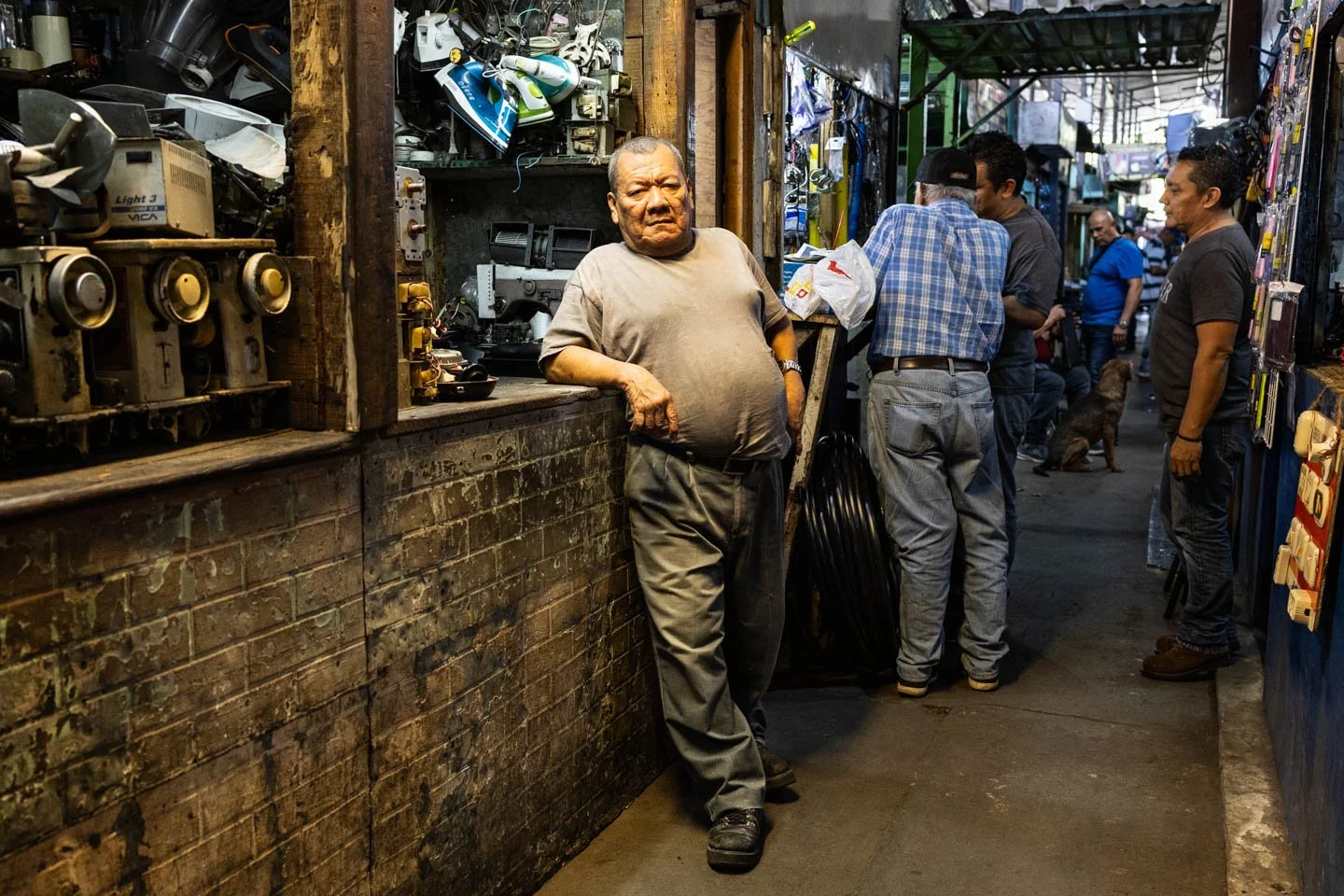
San Salvador, EL Salvador
San Salvador, the nation’s capital, is still catching up to the twenty-first century. Modernization is happening slowly, and as you walk through the city centre of national palaces and central parks you will find that most of the side streets and neighbourhoods of commerce are just as they were fifty or more years ago.
This man works inside a covered row of shops that runs along 4th Street East, right across from Liberty Plaza, one block from the National Library, and as close to the heart of the city as you can get without skipping a beat. But he’s not at all worried about twenty-first century progress pushing him aside for bigger and better things. It’s no secret that Central America has always been the last place on anyone’s list for change to happen, and he knows he’s got at least another fifty years here if he wants it.
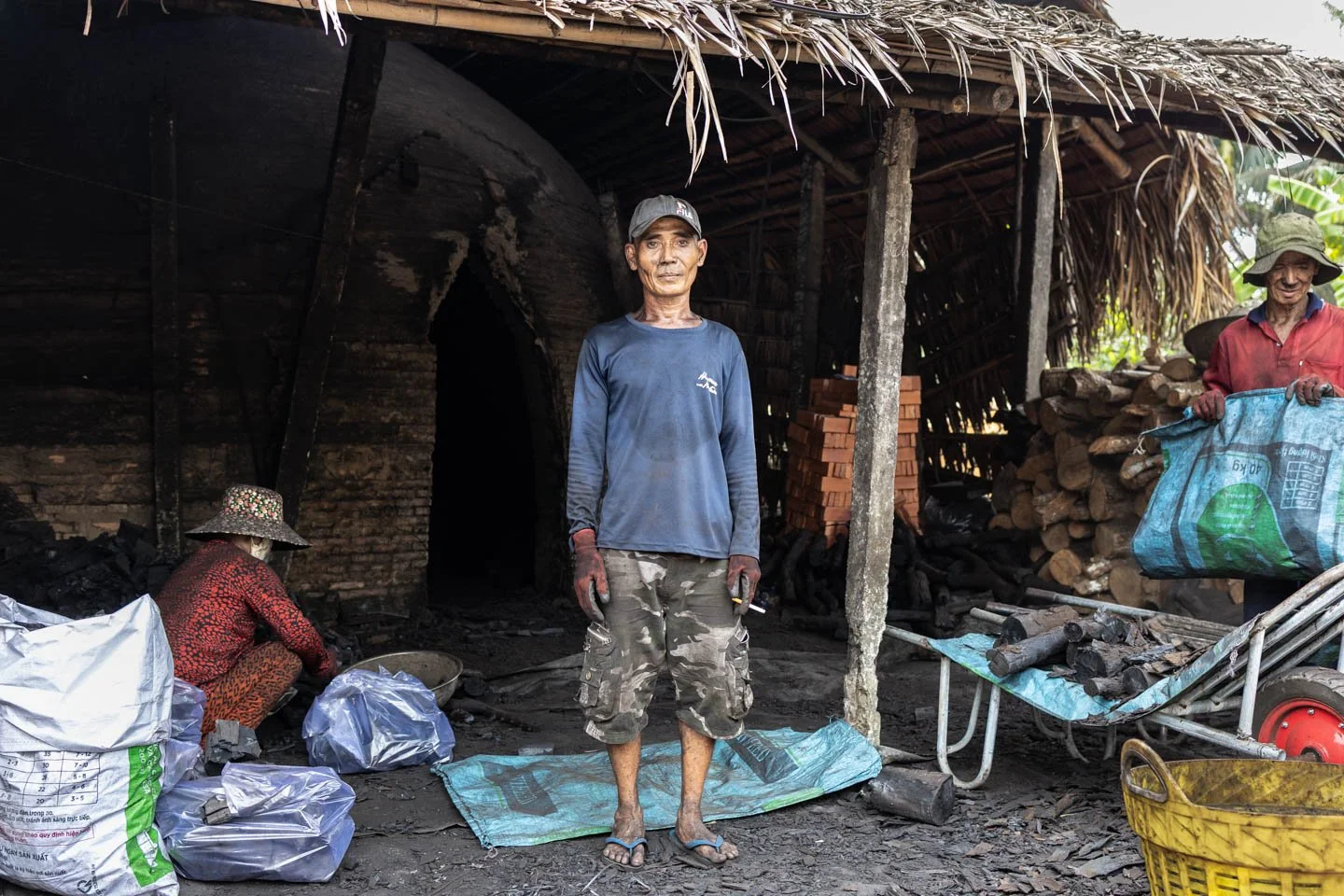
Long Phú, Mekong River Delta, Vietnam
This charbonnier and his crew work together in the very south of Vietnam just outside of the small town of Long Phu. Their kilns are strategically located on banks of a narrow branch of the Hau River. It’s just wide enough for small cargo boats to bring in fresh cut wood and carry out the charcoal they make with it. The process takes days and the crew works hard.
The Hau River runs parallel to the Mekong, stretching from the South China Sea all the way through the delta until it crosses the border into Cambodia where it changes its name in the Bassac and continues to flow all the way to Phnom Penh. For this carbonnier and his crew, hard work goes a long way.

Phnom Penh, Cambodia
These city streets in the oldest neighbourhoods of Phnom Penh are tightly packed with four and five story walk-up apartment buildings. They’re decades old and crumbling but still home to a large population of the city’s less fortunate who are often excluded from the progress of life around them.
Though the buildings may be in decay, the communities they are home to have remained vibrant, hidden within a labyrinth of narrow and self-sufficient laneways that have kept their existence a secret and their lives safe from nowhere else to go.
We need a counterweight to the newsworthy images that bombard us daily, depicting the lives of others from within the context of endless global tragedies. But everyday life is far more ordinary and beautiful than this.
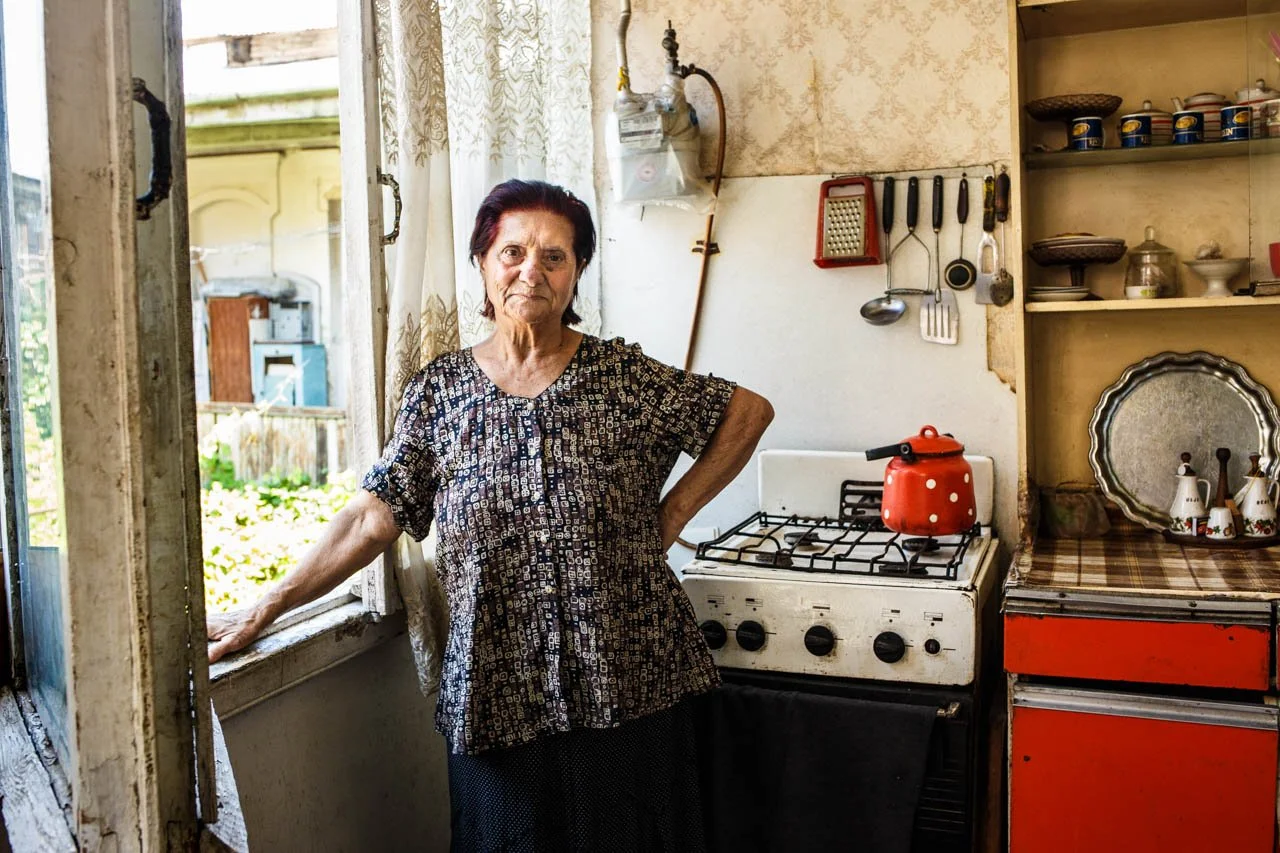
Tbilisi, Georgia Republic
This woman and her husband live in Tbilisi, the Republic of Georgia’s capital. They’re part of a small Russian population who remained in Georgia after the fall of the Soviet Union, and in their elder years they still live in the same tiny house where they’ve lived most of their lives.
Were you to walk the streets of Tbilisi today you would see a nation on the rise: crumbling buildings are being restored; boutique hotels are welcoming new tourists; and government programs are encouraging the development of a new digital economy to entice younger generations to settle here and grow the country anew.
But for the elderly, like this lovely woman and her husband, little has changed over the past 35 years. Most have only a small pension to live on, and little government assistance to help them. They have become this growing nation’s new class of the aging poor.
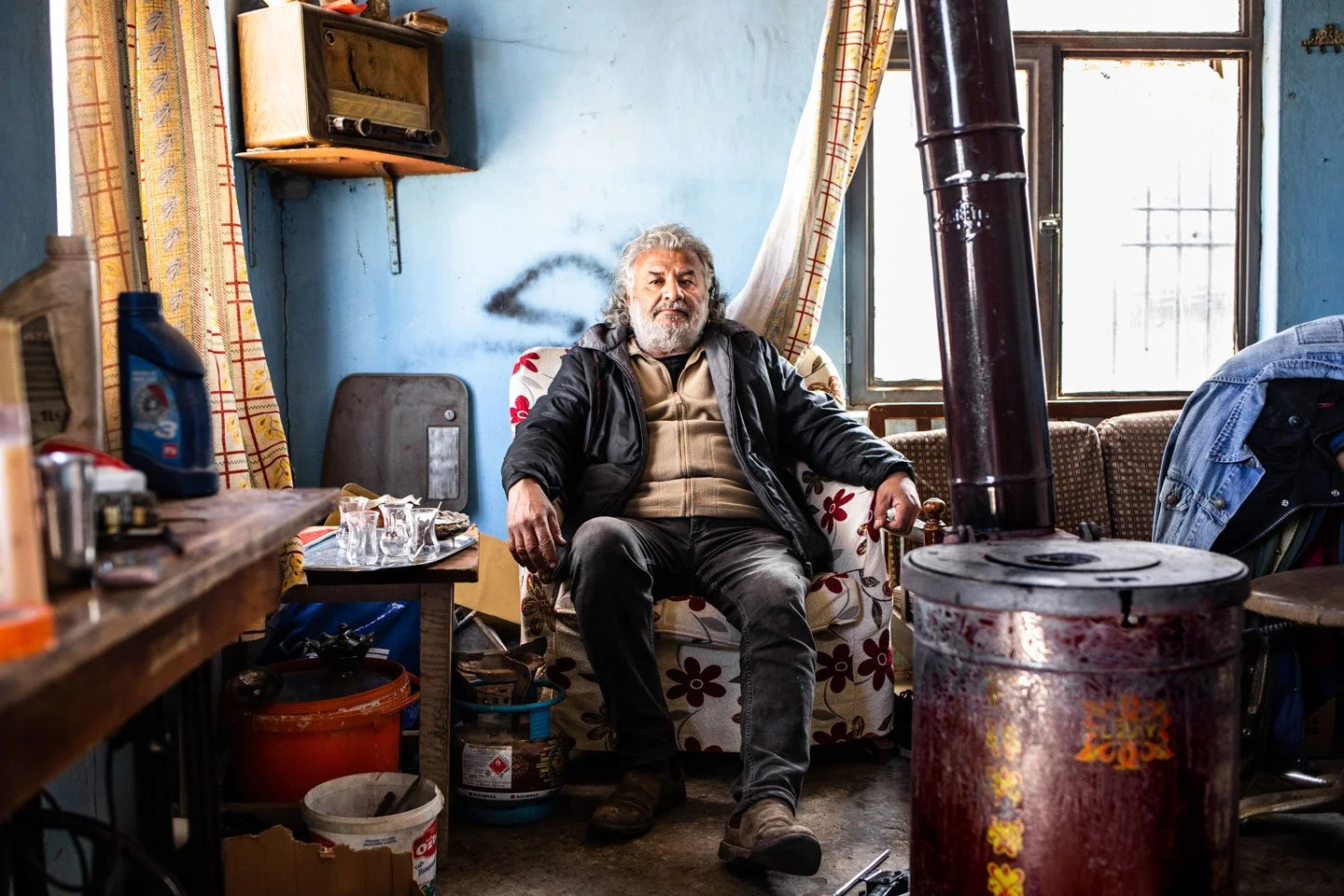
Gaziantep, Türkiye
This man runs a small automotive repair shop in the eastern Turkish city of Gaziantep. The shop is attached to his home, connected to the living room where he sits now. A wood-burning stove anchors the room while bottles of motor oil seem as perfectly placed in the cluttered space as any ornament, teacup or propane tank.
As you might imagine, he’s the kind of person who is bothered by little and who feels at ease wherever he goes. It’s his general disposition in life. Important things come first. He’s more interested in art than politics, in his neighbours than his nation, in what he has than what he has not. The clutter in his life is not deliberate, it’s just the way things fall.

Sham Shui Po, Hong Kong
Today is the 23rd of March, 2024, the day Article 23 takes effect in Hong Kong. There is otherwise no explanation for why this discarded sofa has been placed here on this street, facing outward as clearly as it does. It will soon be carried away with the morning trash, but until then it is giving this man a window of opportunity he never thought to look for — a chance to take pause before a busy day and enjoy the comfort of breathing room he didn’t know he needed.
This is the first time in decades he’s looked out over the city from such a quiet place of peace, beyond nostalgia for its past and towards a genuine, plausible hope for its future. The morning’s outlook is clear and promising. Things are rarely as bad as they seem. Time is always on your side. He sits back, well aware that his vantage point has an hour at best before it’s hauled away. Just in case it never comes back he intends to cherish every second.
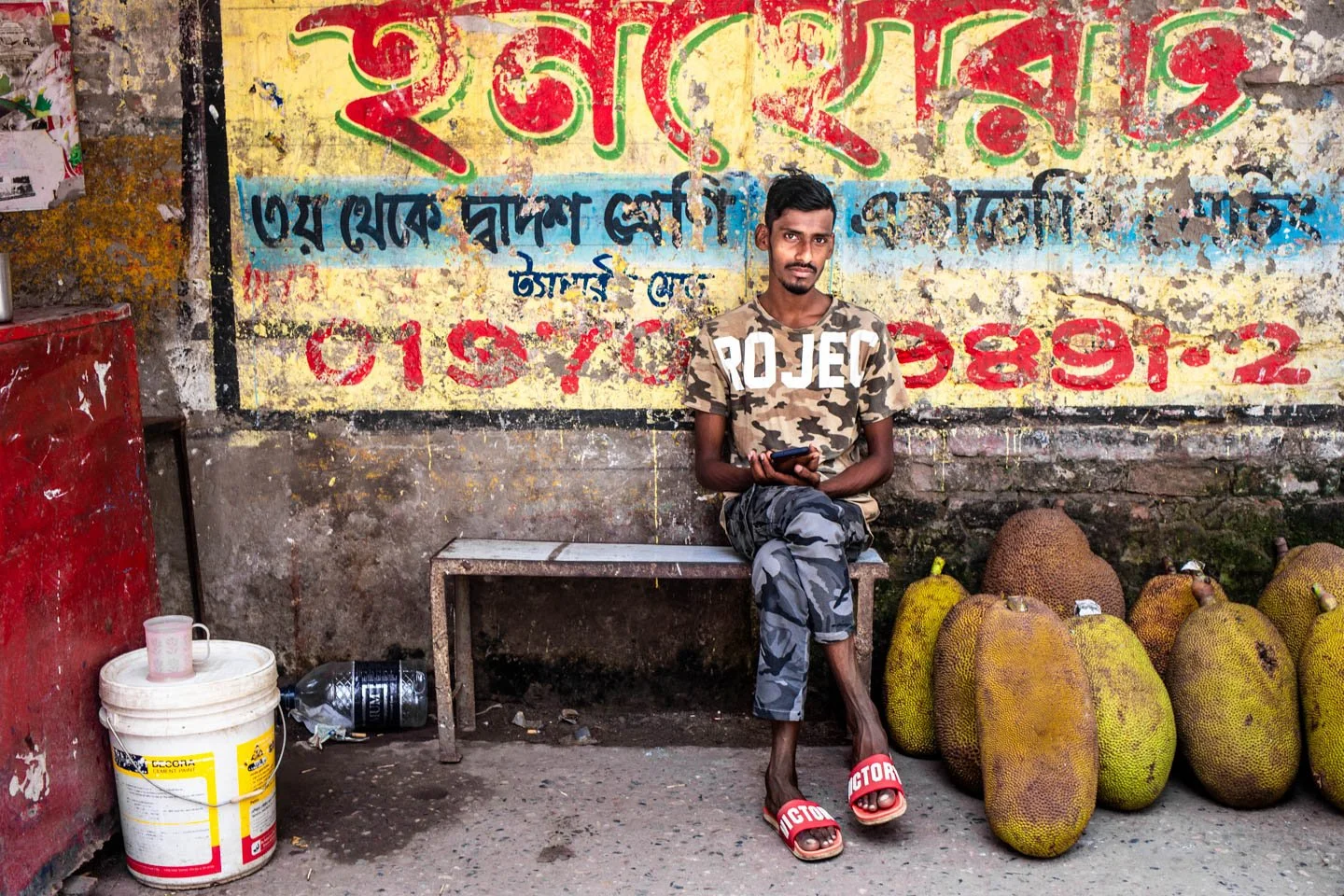
Dhaka, Bangladesh
It’s jackfruit season, the national fruit of Bangladesh. Everyone in the country loves this fruit and treats it with reverence and respect. The man sitting here is neither buying nor selling jackfruit, they are all just sitting here together, passing the time.
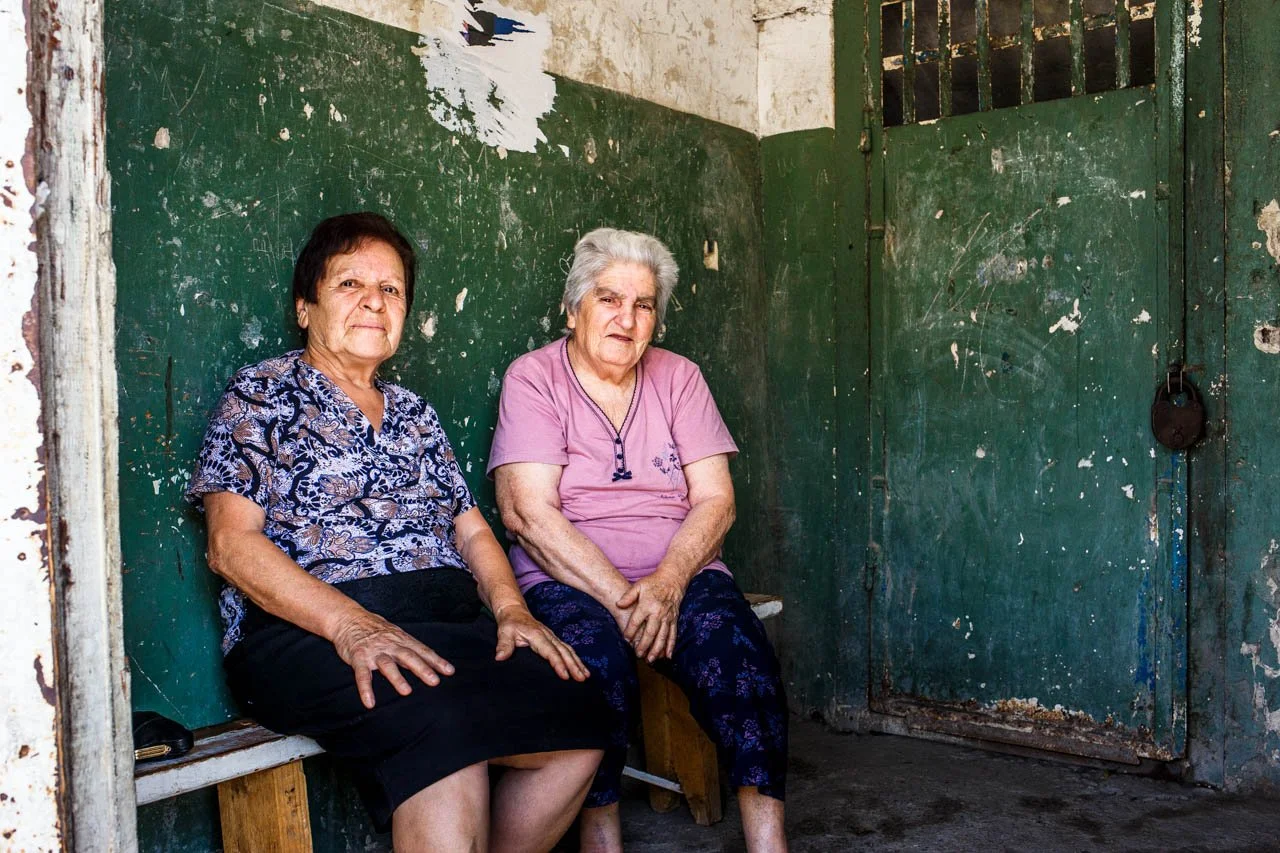
Vanadzor, Armenia
These two women live in the same 4-story walk-up in the Armenian city of Vanadzor. The buildings here and throughout the country are all Soviet-era construction with steep stairwells that make for tough climbs on hard concrete steps. For these women it’s a climb they need to prepare for. They will often sit here whenever they get home, thirty minutes or so, waiting to get their legs back.
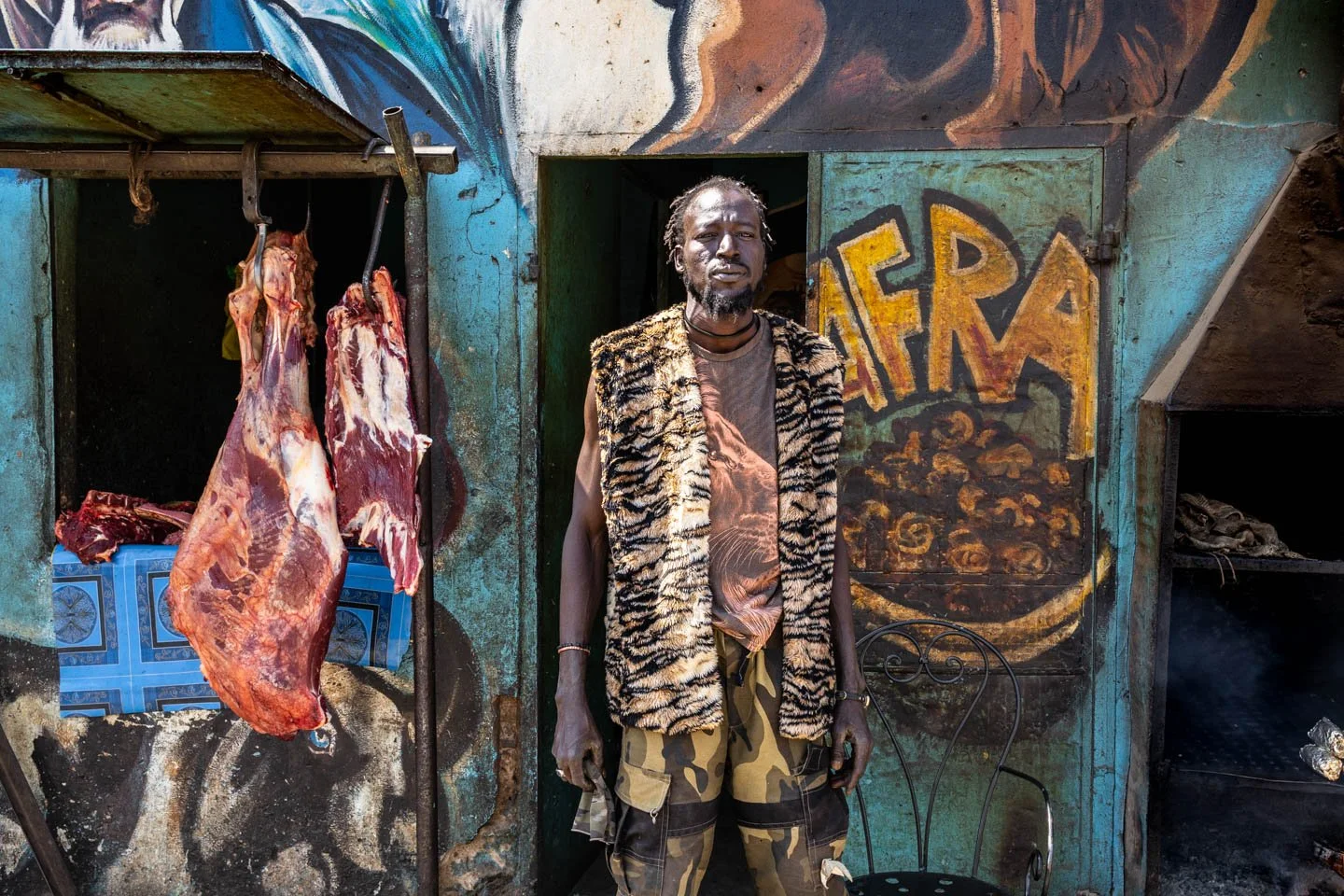
Latrikunda Sabiji, Serekunda, Gambia
There’s a small Rastafarian subculture scattered throughout urban neighbourhoods in the otherwise Muslim majority population of Gambia, likely numbering under a thousand in a country of three million. At first glance it may seem implausible for these two distinct cultural communities to coexist, but in reality it is quite the opposite.
The Muslim population in Gambia is shaped largely by Sufi traditions rooted in spirituality, humility, love and tolerance. Even though their social and cultural ways of life may differ, many Sufi Muslims recognize the Rastafarians’ spiritual devotion to peace and love and empathize with their longing to reconnect to their African roots. The two communities share a sense of African brotherhood, a bond of mutual respect stronger than their differences.
The Everyday of Life is a photography project that seeks to level the field in how we understand and appreciate the lives of others, seeing beyond the hardship to the beauty that thrives in spite of it.
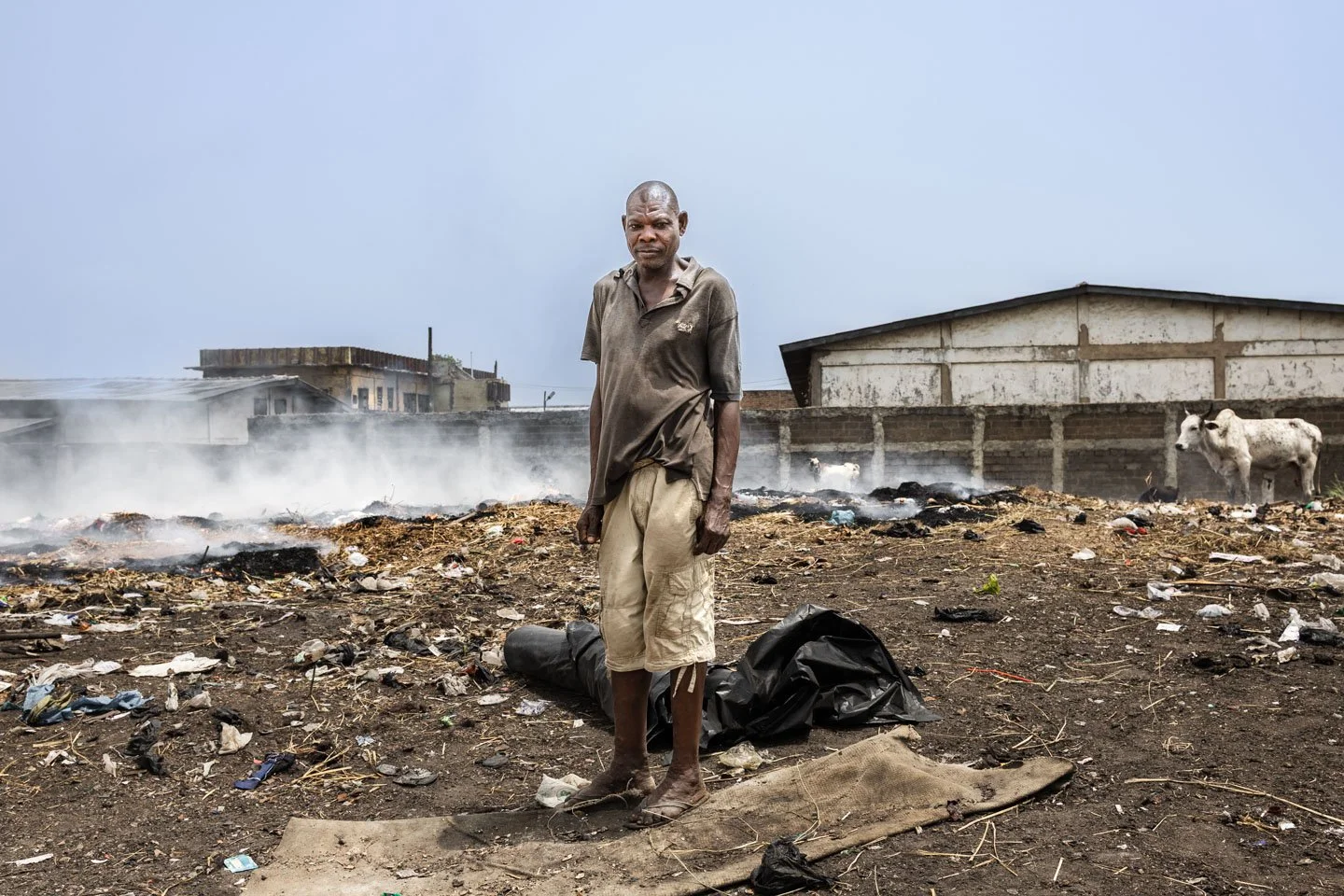
Accra, Ghana
This man works at one of the many local dump sites scattered throughout Accra. They are meant to be interim locations where independent collectors can easily unload their carts of waste collected from neighbourhood streets and homes. The waste from these interim sites will eventually be picked up by municipal trucks and brought to larger landfill locations outside of the city. In a perfect world.
But every step along the way has been compromised by an ever-growing accumulation of waste. Landfills are overflowing. Fewer trucks can bring new loads of waste. Local city dumps are left uncleared and too full for local collectors to empty their carts. Tomorrow’s neighbourhood waste has nowhere to go.
The solution, for this man and everyone in this long chain of waste management, is to light it all afire. Whether in this local dump or in the city streets or outside your own front door, in this imperfect world of Accra, garbage burns.
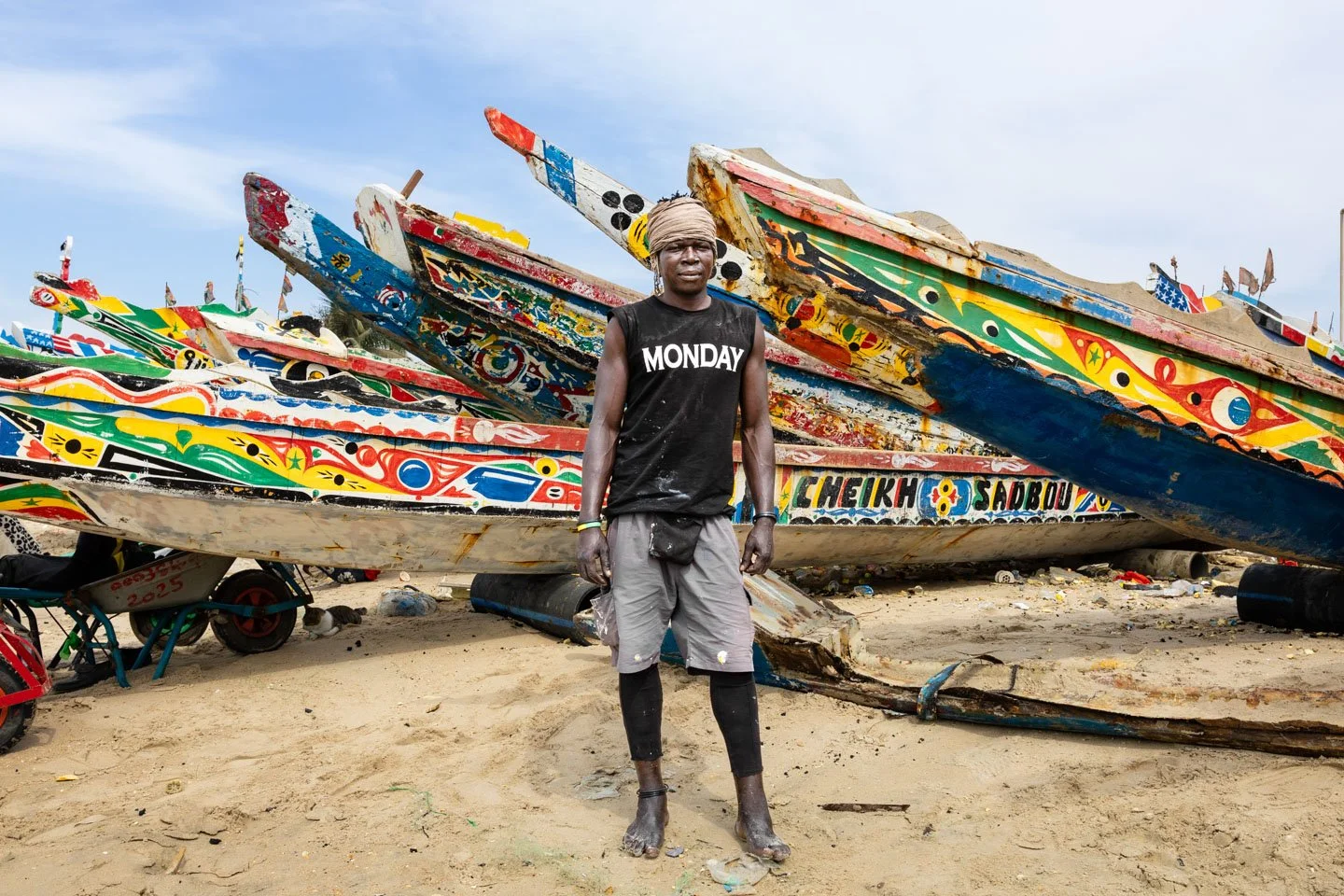
Tanjeh, Kombo South, Gambia
The most bountiful fishing port on Gambia’s Atlantic coast is in the village of Tanjeh. Hundreds of small, mahogany boats line the shore where crews of young men take morning and nighttime shifts to fish the waters 30 kilometres out. In Gambia this is the highly respected low paying job of a lifetime.
But the majority of fishermen at work here are not Gambian, they are the Wolof people of coastal Senegal, young men who have been born and raised on the Atlantic and become legendary as the most skilled fishermen in West Africa.
This man is one of them. He travels by water from Senegal to Gambia, staying weeks at a time away from his family, earning his keep and building his reputation. He is admired and appreciated by everyone in the crew for giving them the upper hand and revered by his captain as the greatest among them.

The Town of Lin on Lake Ohrid, Albania
On the highway into and out of the small town of Lin this man sells his fall harvest of onions, potatoes, and his home-made hot pickled peppers preserved in small, plastic water bottles. Throughout the day he waits down the road, relaxing in the grass and under the shade trees. But whenever someone begins to approach he quickly makes his way back to his market stand, buttons his jacket and stands up straight and proper behind his goods — the perfect gentleman waiting to greet you.
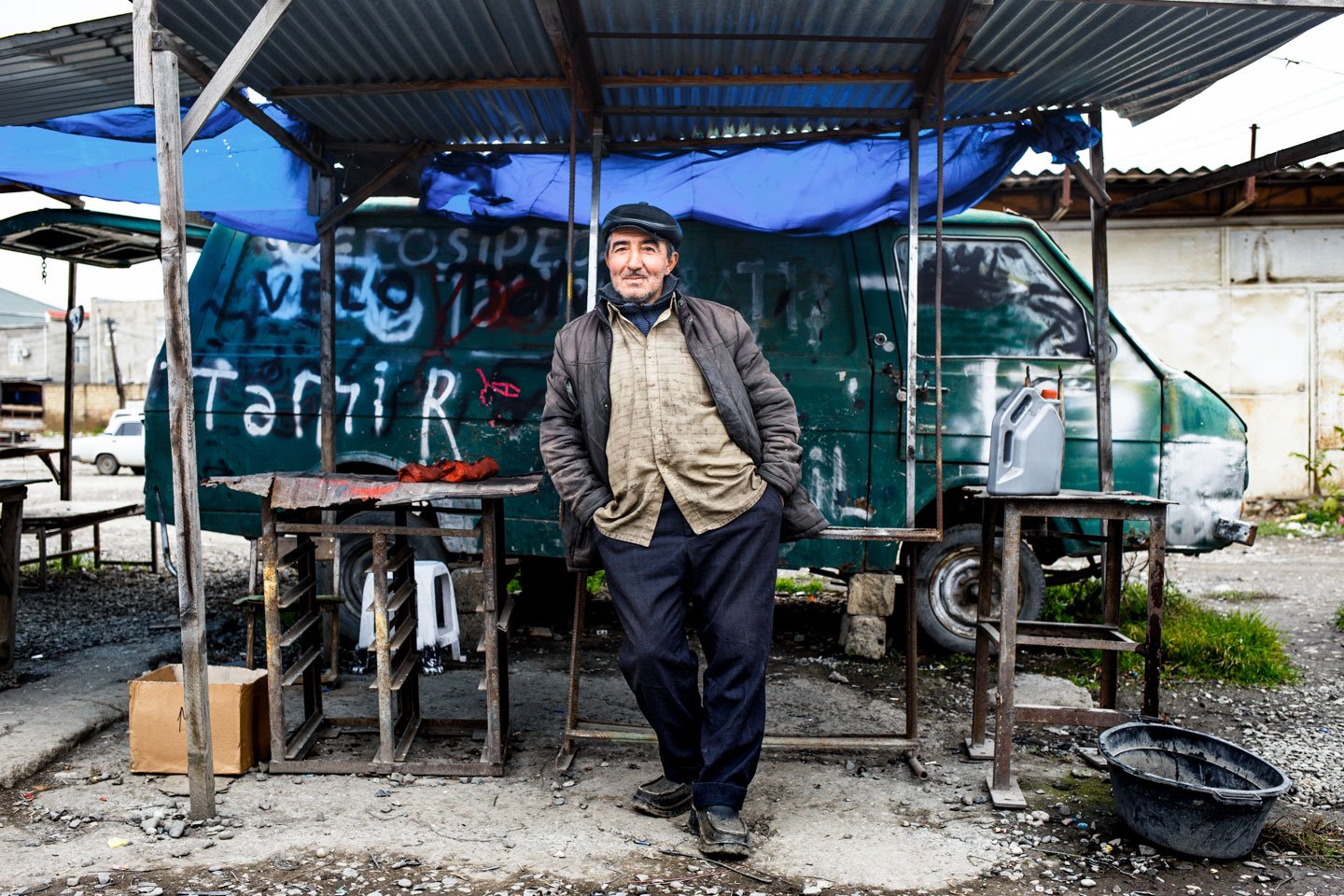
Quba, Azerbaijan
The small Azerbaijani city of Quba rests comfortably to the east of the Caucasus mountains, right where they begin to unwind into the quiet shoreline of the Caspian sea.
Within the city of Quba itself, and resting just as comfortably, this man is enjoying his own quiet moment of peace. Unwinding like the mountains around him. Taking everything in and nothing for granted.

Sololá, Guatemala
This man is standing at the northern-most entrance to the mountain town of Sololá in central Guatemala. Every Tuesday and Friday, hundreds of people from neighbouring highland towns make the trek here to buy, sell and trade their wares at this most popular market in the region. They will travel by bus in the early morning from as far away as three hours, and stay only until lunch is over before making the trek home again. It may seem like a long way to for so little time, but for everyone who regularly makes this trip, it’s like a family gathering not to be missed.
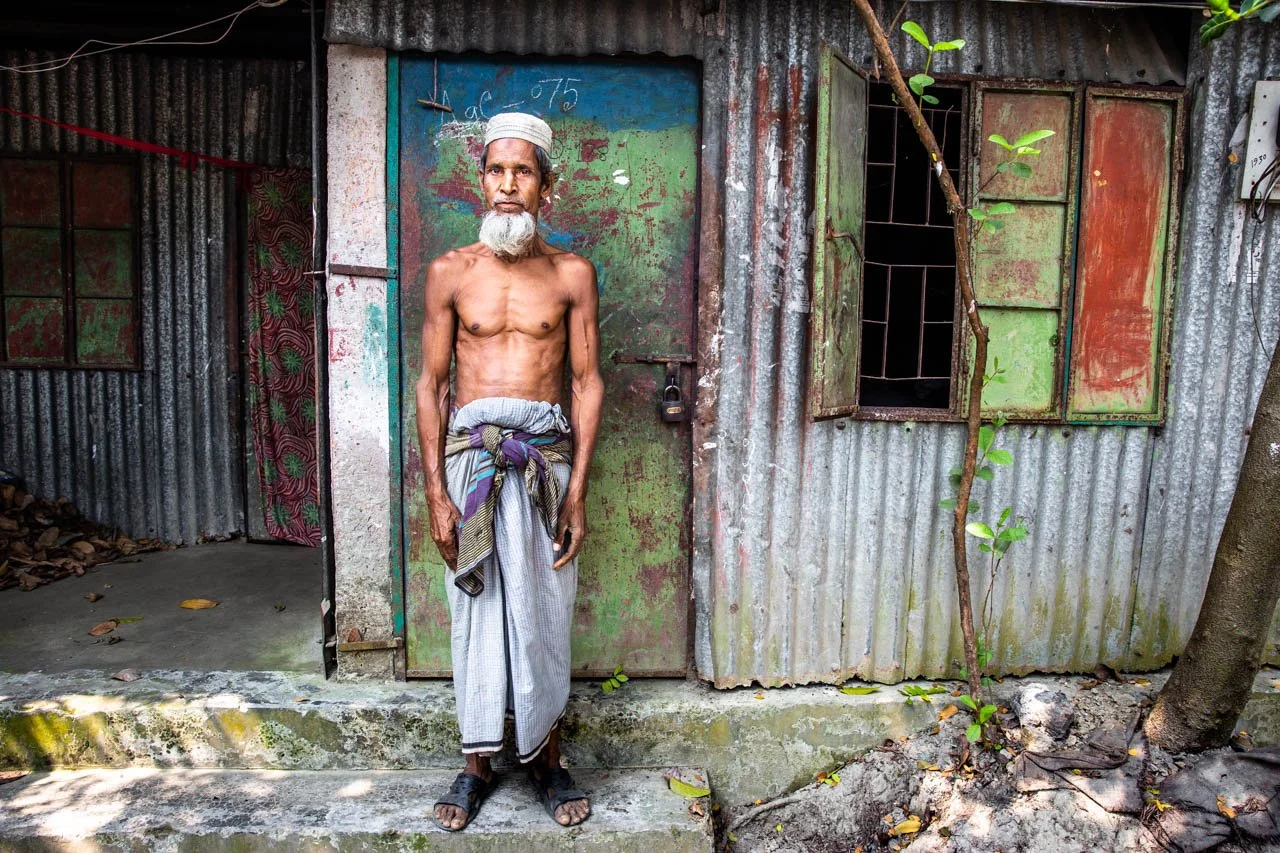
The Town of Patuakhali, Bangladesh
In southern Bangladesh, just outside the town of Patuakhali, is a small, planned, residential hamlet where Muslim and Hindi families live side-by-side in modest homes just like this one. There’s a small mosque and a Hindu temple along the main road, but the rest of the town and its community grounds are intended to bring the religions together, and without government intervention.
This community has been left alone to become what it’s residences make of it. Though as poor and sparse as other villages in the region, this one has become a model neighbourhood, and everyone works hard to keep it that way.

Antalya, Türkiye
This small neighbourhood in the big city of Antalya is a close-knit community of lower income families who’ve all come to know one another well. During the day the front door is left open, replaced by a curtain that’s more for shade than privacy, and a few chairs are always kept outside as a standing invitation to stay a while. It may not be the most prestigious place to live, but no one spends the day alone.

Dhaka, Bangladesh
These young men have been put in charge of the family goats. At least until tomorrow. They’ve been caring for them for three days as the city and nation prepare for Eid-ul-Azha, also known as the Festival of Sacrifice.
Tomorrow morning the entire Muslim world will sacrifice their cows, goats and sheep in celebration of Ibrahim’s willingness to sacrifice his own son as a show of faith to Allah.
These animals will be slaughtered right where they stand. It will be bloody and brutal and difficult to accept. The meat will be carved up right on the street the very same day. One third of it will be for the family to keep, one third to share with friends, and one third will be distributed to the poor who can’t afford to buy meat for themselves. It will be an emotional day and these young men know it’s coming.

Asella, Oromia Region, Ethiopia
Goat Street is located near the central market in the city of Asella. It’s just two blocks long and affectionately called Goat Street because it’s where the city goats have all decided to settle, but it could just as easily be called Khat Street because it’s also where people come to buy and consume khat leaf, the legal drug of choice in Ethiopia.
Khat leaf is a natural stimulant native to the Horn of Africa. It’s chewed slowly throughout the day to help curb one’s appetite and ease their worries, all while providing a mild sense of euphoria as persistent as it is addictive.
A fresh harvest of khat leaf arrives here every morning and is consumed in dark, discrete tea houses that line the street. The discarded leaves and stems are always in abundance and have created an ideal grazing ground for the goats. Over the years and from all over the city, this is where they’ve decided to settle, unlikely to leave even if they wanted to.
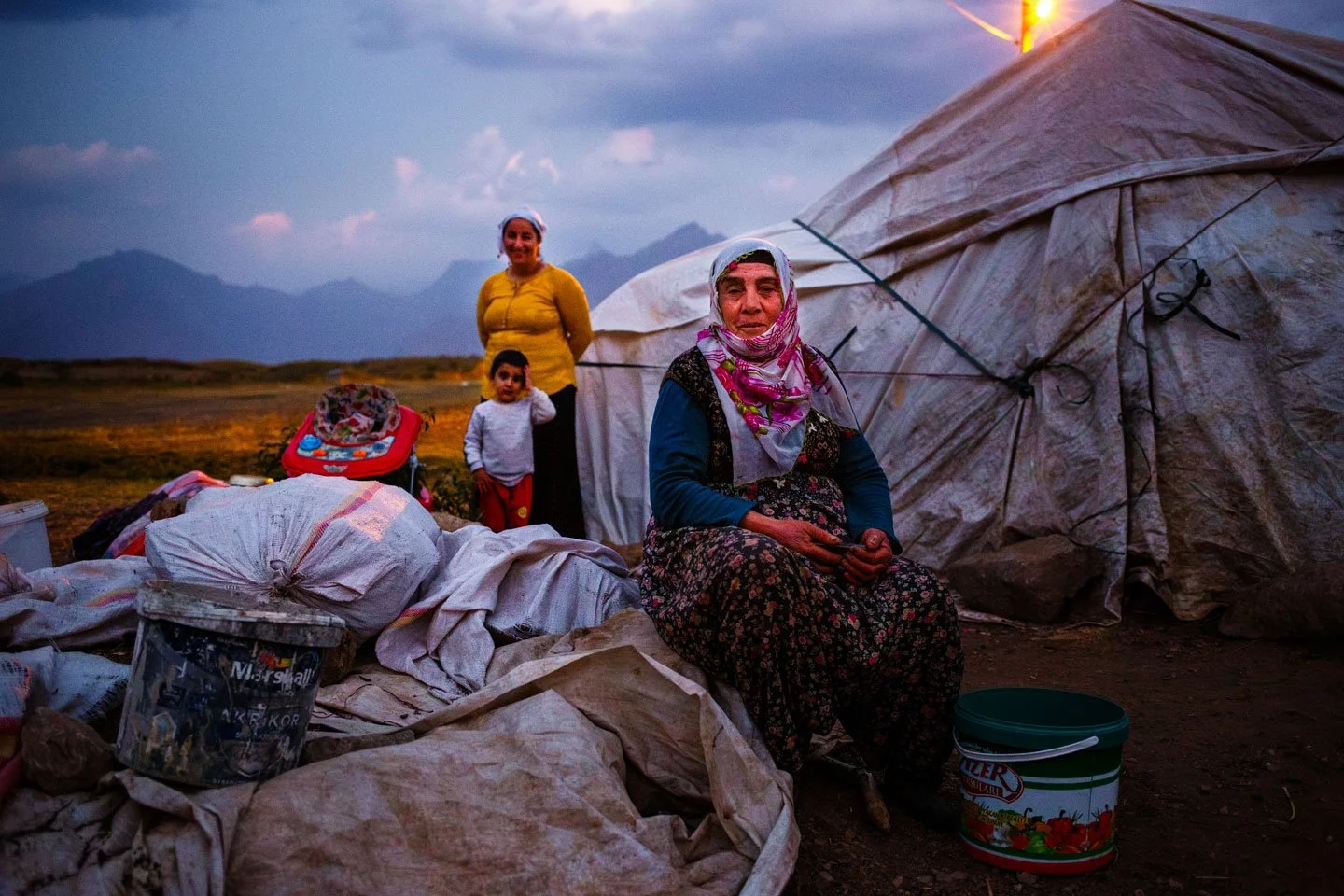
Hakkâri Province, Türk Kurdistan
For much of their history the Kurdish people have thrived as pastoral nomads, roaming the land as they tend to their herd of sheep and goats. Very few Kurds live a nomadic life today, and they do so less out of necessity and more as a way of reclaiming their heritage.
This small nomadic tribe consists of four families, mostly women and children who will live together for the entire summer. They will roam the hills and sleep in tents almost like a summer camp but for real. They will learn to live as their ancestors did, caring for their animals and living off the land, sharing stories of what it means to be Kurdish, and sing songs that rejoice it.
This photograph was taken at sunset, an hour north of Hakkâri city. The workday has just ended, dinner will soon be prepared over an open fire, and an evening of song and dance is about to begin.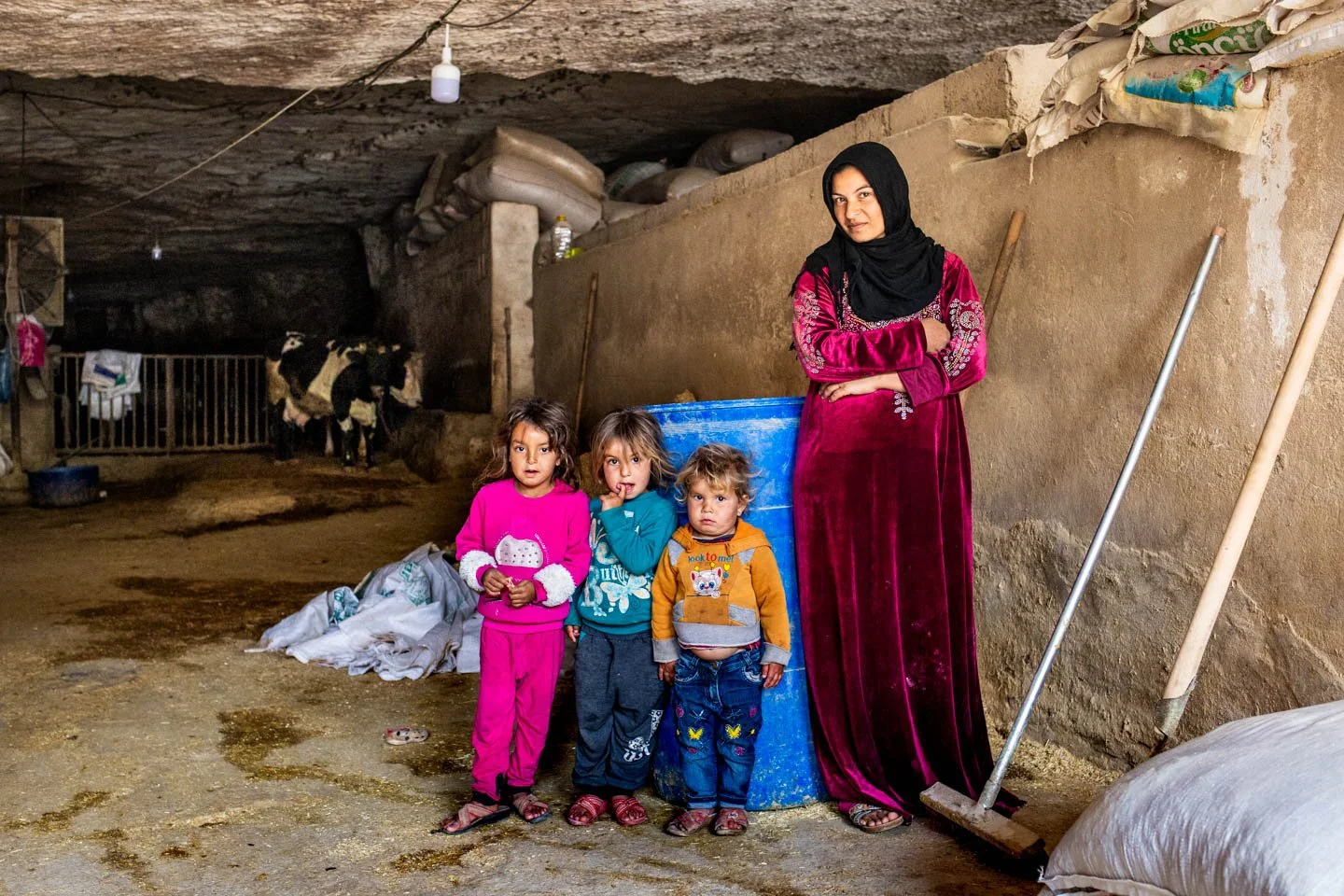
Sanliurfa, Türkiye
This young mother and her three children are standing just inside the entranceway of a large, limestone cave on the hillside in the outskirts of the city of Sanlıurfa. Behind the iron gate, where the lone cow stands in the background, are the other 44 cows of the herd, huddled comfortably and cool in the darkness.
The family home is built into the hillside and just to the right of the cave’s entrance, her husband stands to the left, just outside the frame of this photograph. The hillsides of Sanlıurfa are home to dozens of cattle rancher families, just like this one who occupy the caves left behind by a combination of natural occurrence and limestone excavation. The surrounding terrain is otherwise rocky and rugged, but the caves themselves are like an oasis, cool comfort for the cattle when they are not on the hillsides grazing.
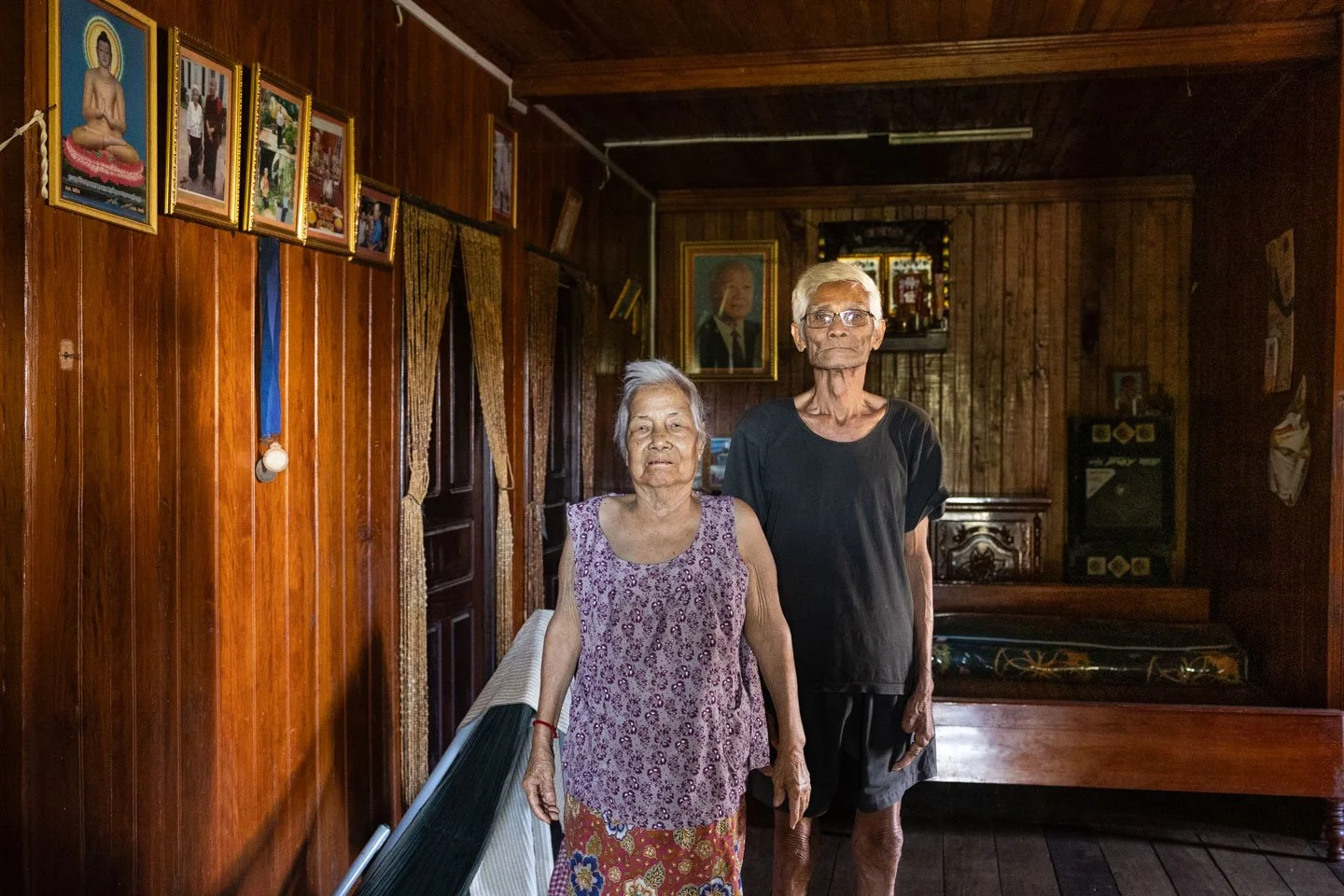
Krong Kracheh, Cambodia

Addis Ababa, Ethiopia
This young man lives alone in Ethiopia’s capital city of Addis Ababa. He is one of millions to abandon the mounting challenges of life in the countryside, leaving his village and family home for the lure of prosperity that only the growing capital can offer. Its population has nearly doubled in this past decade alone.
He lives here on a side street in the city centre, surrounded by construction zones, in this small dwelling he has made from tin and wood. To his left, just out of view, are neatly stacked bundles of coal organized by size and weight that he will sell throughout the day at a price that can’t be beat. It’s a business he has built from the ground up and the possibilities are endless.
Mumbai, India
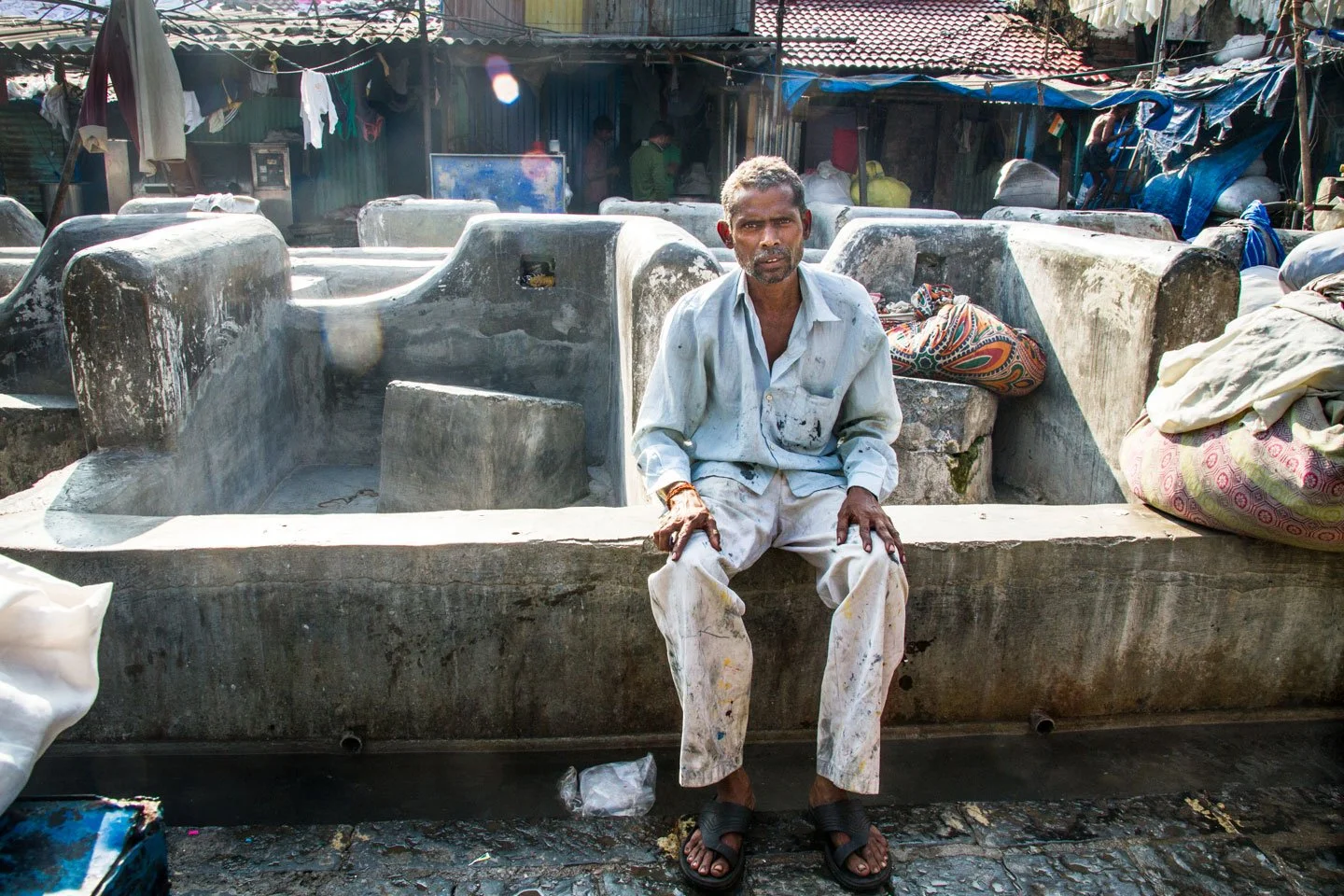
Dhobi Ghat in Mumbai is the world’s largest outdoor laundry facility where the Dhobi cast of men and women wash clothes for many of the businesses in the city. This photograph was taken at the end of a long, hard workday. It is often the case that entire families work here at Dhobi Ghat, and for many, it is also where they live.
Long Phú, Mekong River Delta, Vietnam
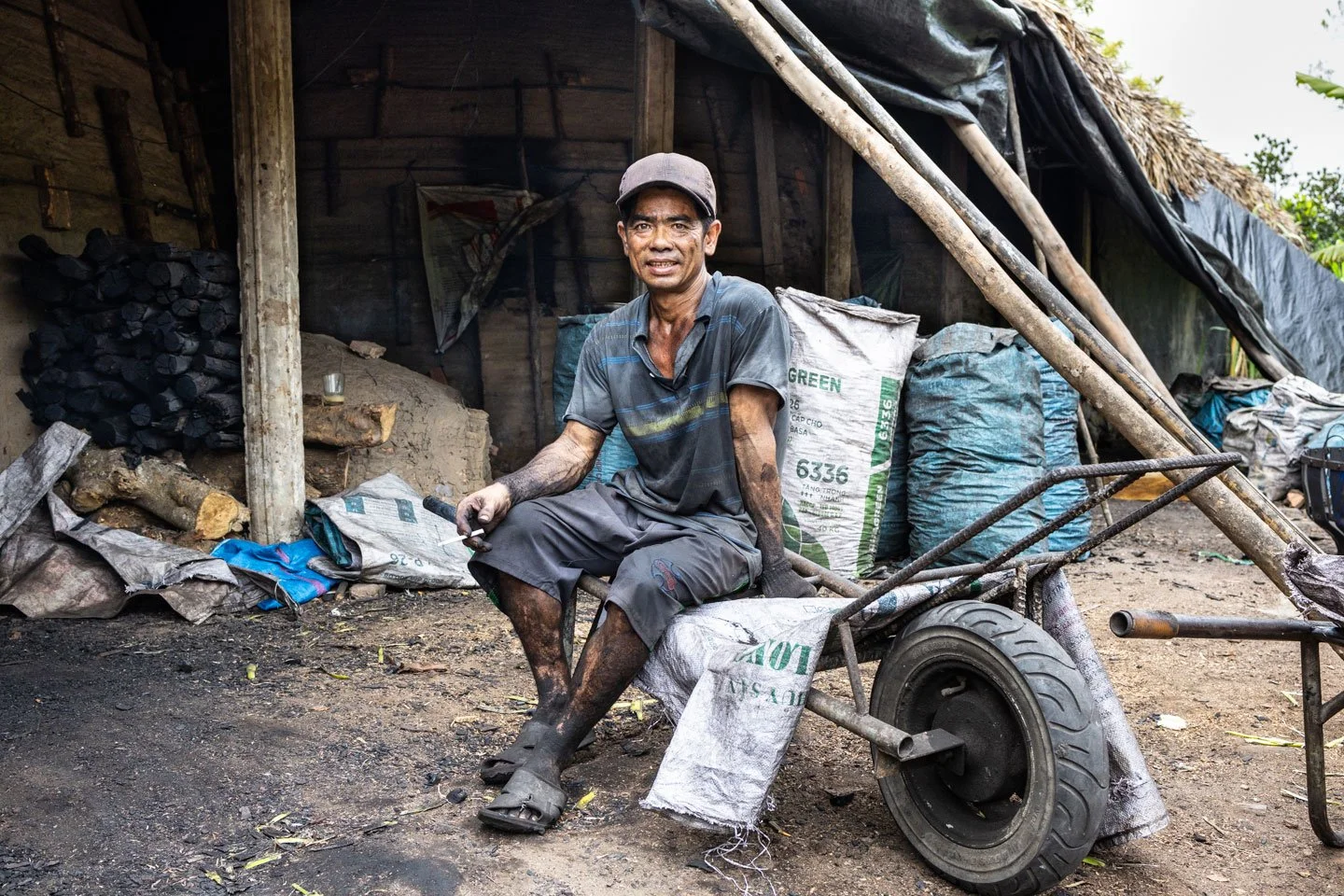
This man is a charbonnier — a dying breed in Vietnam and in more ways than one. He spends most of his day inside a large, smoke-filled brick kiln piled high with wood that’s being slow burned into charcoal. The dozen or so people he works with all live together in huts right here at the kiln, usually by a river or under a bridge where the wood and coal can be easily transported in from the hillside forests and then out to the communities who still rely on charcoal for fuel. They’re tight, like family, sharing meals and looking after one another.
Other than burning raw wood, charcoal is the cheapest fuel you can get in Vietnam and there is still a large enough population who can’t afford to buy anything cleaner. But everybody knows its days are numbered. There are no apprentices learning the trade anymore, and the youngest people working here are already in their thirties. Theirs may very well be charcoal’s last life.
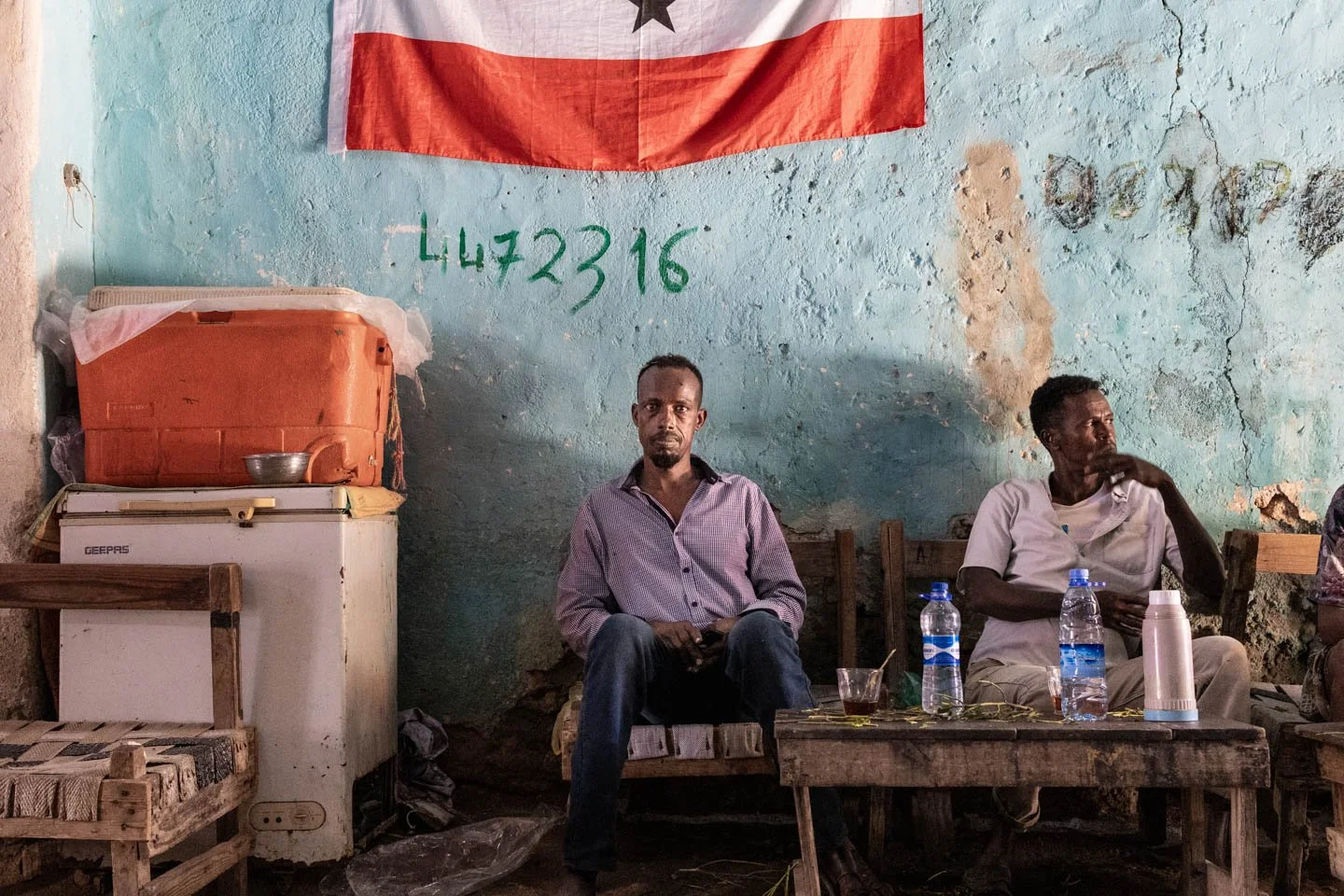
Berbera, Somaliland
It may be true that everyone in Somaliland loves the feeling of independence they’ve enjoyed for over 30 years, but it may also be true that not everyone loves their life here. Outside the bustling capital of Hargeisa there is far from enough work to go around, not for men or for women, and not even here in the port city of Berbera.
Without formal recognition, the government of Somaliland is ineligible for the international aid and loans it needs to help build its infrastructure and economy. Without diplomatic status on the global stage, trade is limited to neighbouring local regions, and any foreign corporate investments is considered far too risky.
Thirty years on, while the nation remains ready for take off, the young and old hard working hands of its people have quietly grown thirty years older.

Kowloon, Hong Kong
These days of March in 2024 are somber days in Hong Kong. I haven’t been here in over forty-five years and may not have a meaningful point of reference, but when speaking with people here I sense a crackling of melancholy in their voices that sounds just like they’ve all been crying.
It’s not the same for everyone, and it’s different for the youth who are just getting started with their families and lives. Some are now trying to build up enough courage to leave this place where they were born while others are searching deep inside to find the courage to stay. These are not conversations to have with strangers but they are being had, quietly in the streets on benches like this, among friends like these.
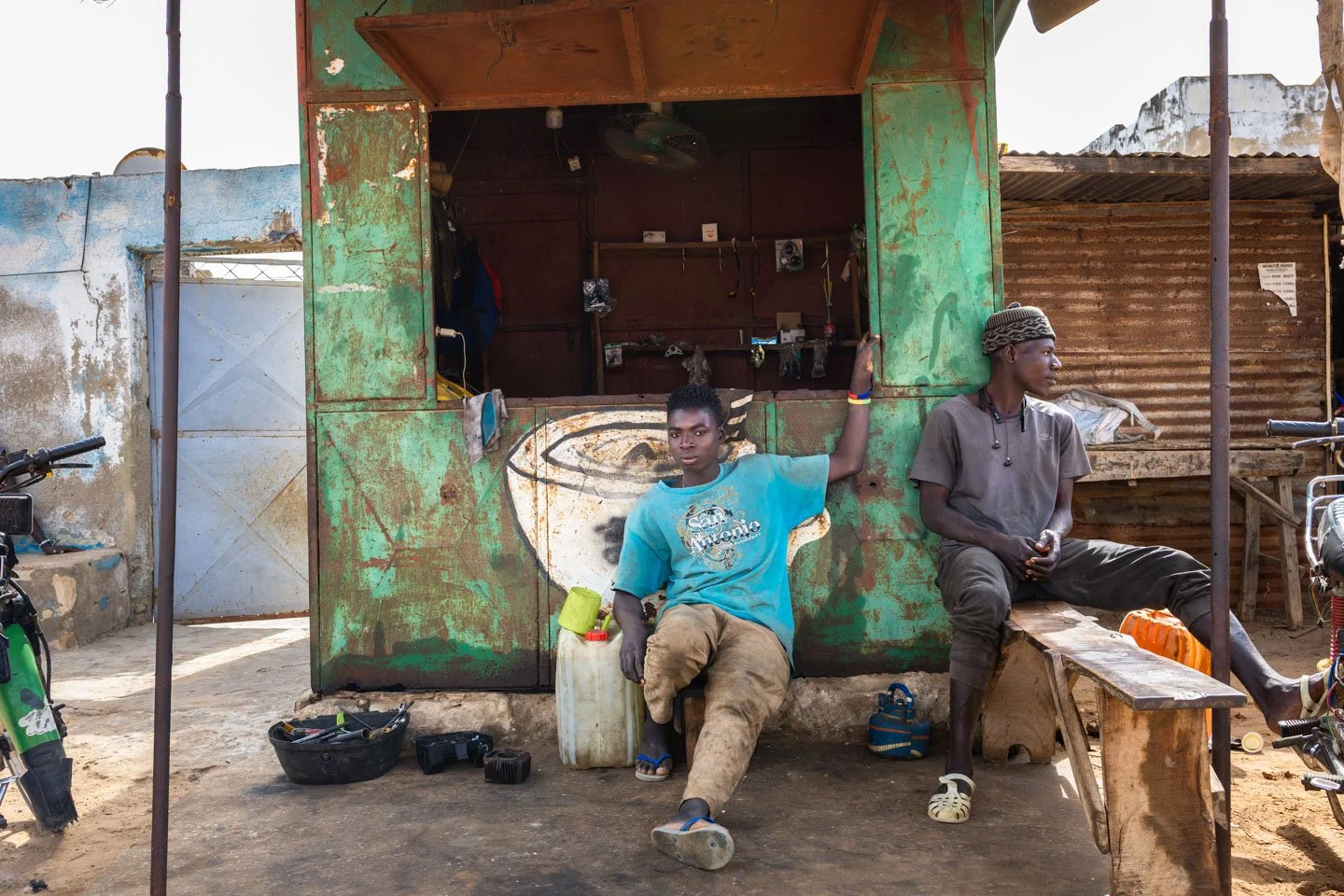
Kaolack, Senegal
There are very few large-scale business enterprises in Senegal. Most work is informal, independent jobs that people create for themselves. Were you to walk the streets of any city you’d easily come across hundreds of clothing vendors, cabinetmakers, tailors and mechanics, each lined up one after the other, using the most basic of tools and building at best a slightly different version of the very same thing. Open early. Closing late. Trying hard to make a living.
These two young men have gone into business together. Their motorbike repair stand is one of many that line the northbound side of the main road heading out of town. It’s another slow morning, but business is bound to pick up.
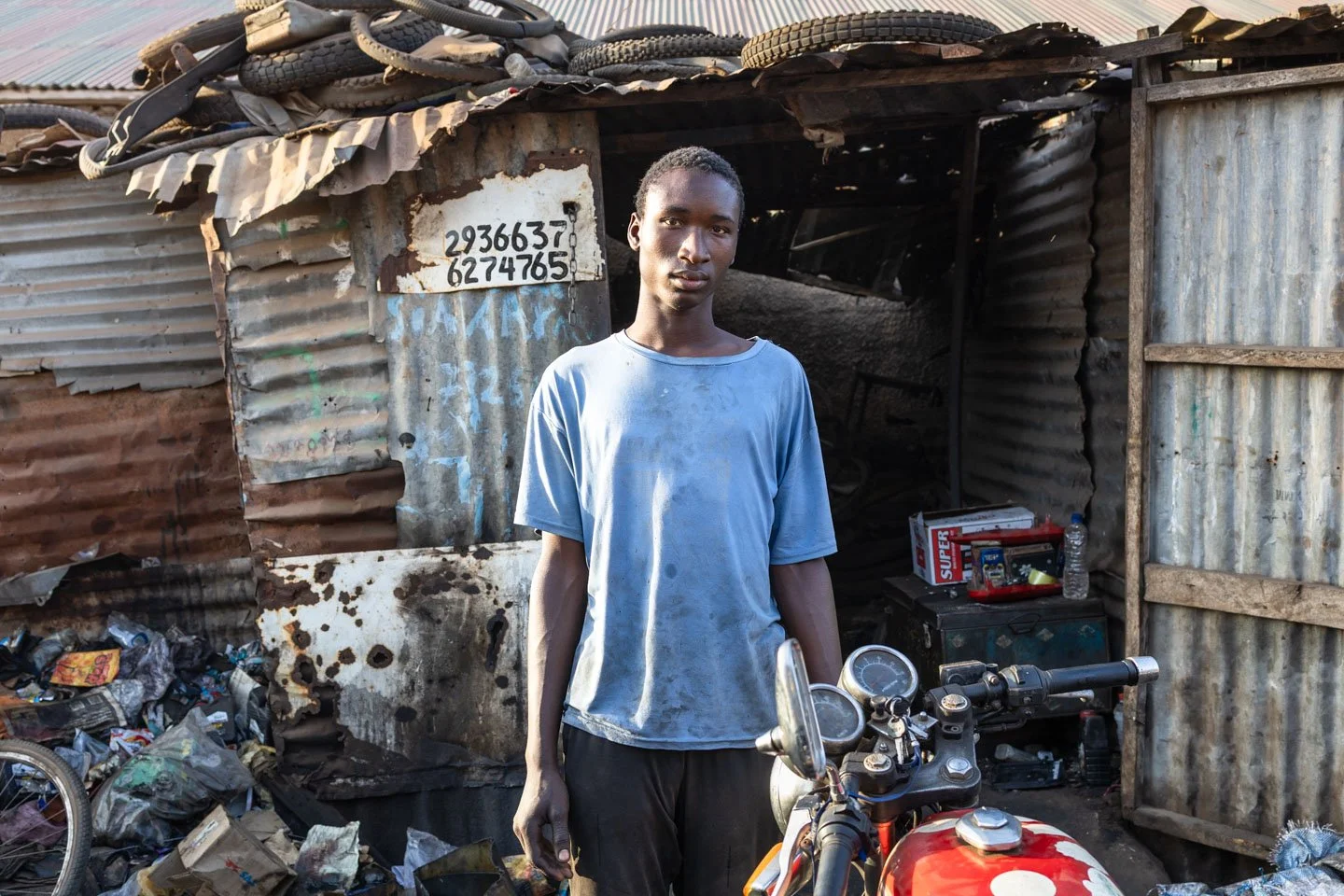
Bundung Borehole, Serekunda, Gambia
This young man is apprenticing to be a motorcycle mechanic. He works here in one of the more established shops in the small neighbourhood of Bundung Borehole, not far from the much larger urban district of Serekunda. The names of cities and villages throughout Gambia reflect the multiple languages and ethnicities of the greater West African region. Five native languages are still widely spoken here: Wolof, Mandinka, Fula, Jola and Serer.
“Serekunda” is Wolof for the home, "kunda", of the respected Muslim scholar, "Sere". Bundung is the Mandinka word for hill or high ground, and Borehole is the colonial British term for water-well.
If you ask this young man where he works, he’ll tell you that his shop is atop of Water-well Hill not far from Sere’s Home.