Ghana, Gambia & Senegal
Taken between January and April of 2026, (' ' opens image text.)
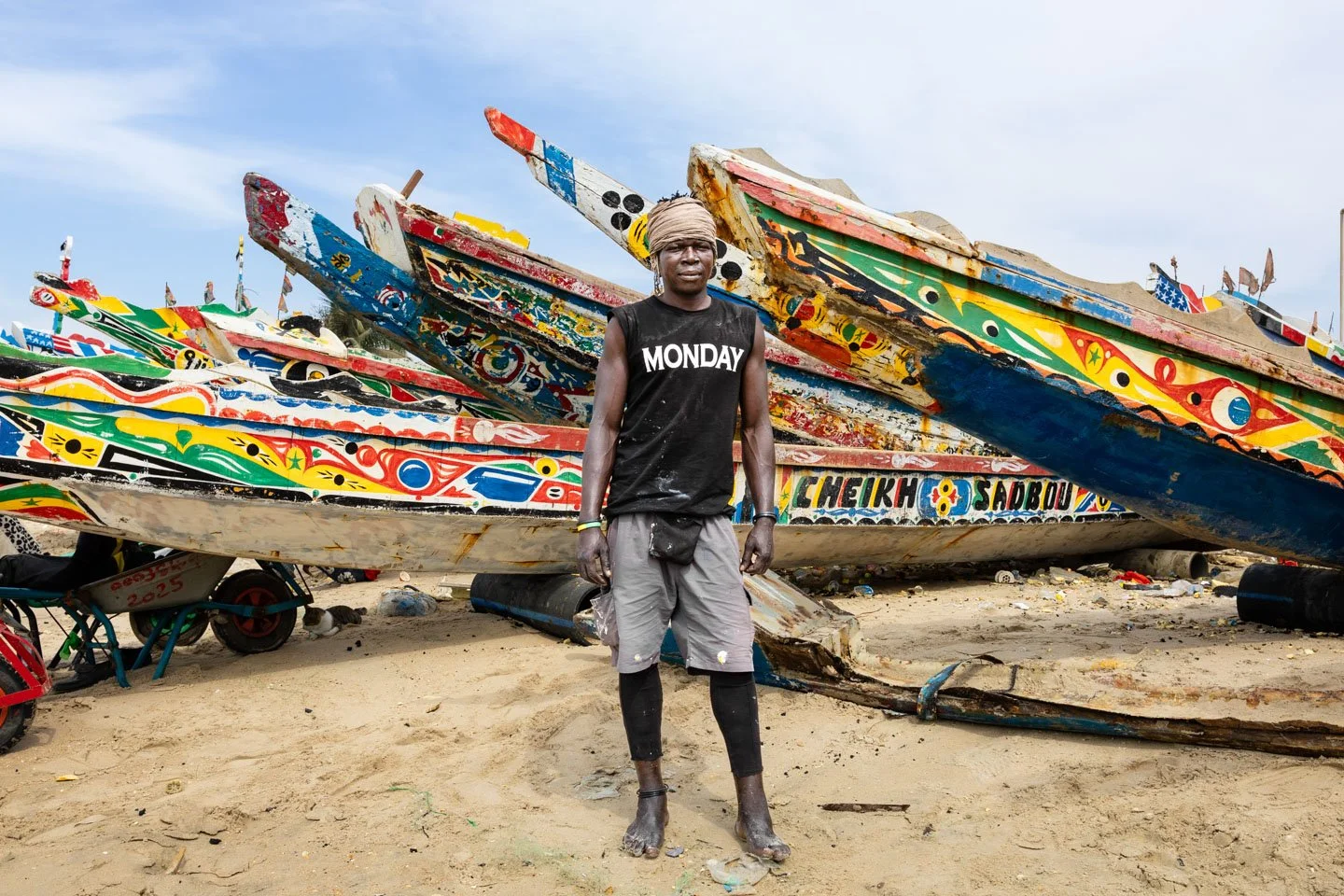
Tanjeh, Kombo South, Gambia
The most bountiful fishing port on Gambia’s Atlantic coast is in the village of Tanjeh. Hundreds of small, mahogany boats line the shore where crews of young men take morning and nighttime shifts to fish the waters 30 kilometres out. In Gambia this is the highly respected low paying job of a lifetime.
But the majority of fishermen at work here are not Gambian, they are the Wolof people of coastal Senegal, young men who have been born and raised on the Atlantic and become legendary as the most skilled fishermen in West Africa.
This man is one of them. He travels by water from Senegal to Gambia, staying weeks at a time away from his family, earning his keep and building his reputation. He is respected by everyone in the crew for giving them the upper hand and revered by his captain as the greatest among them.
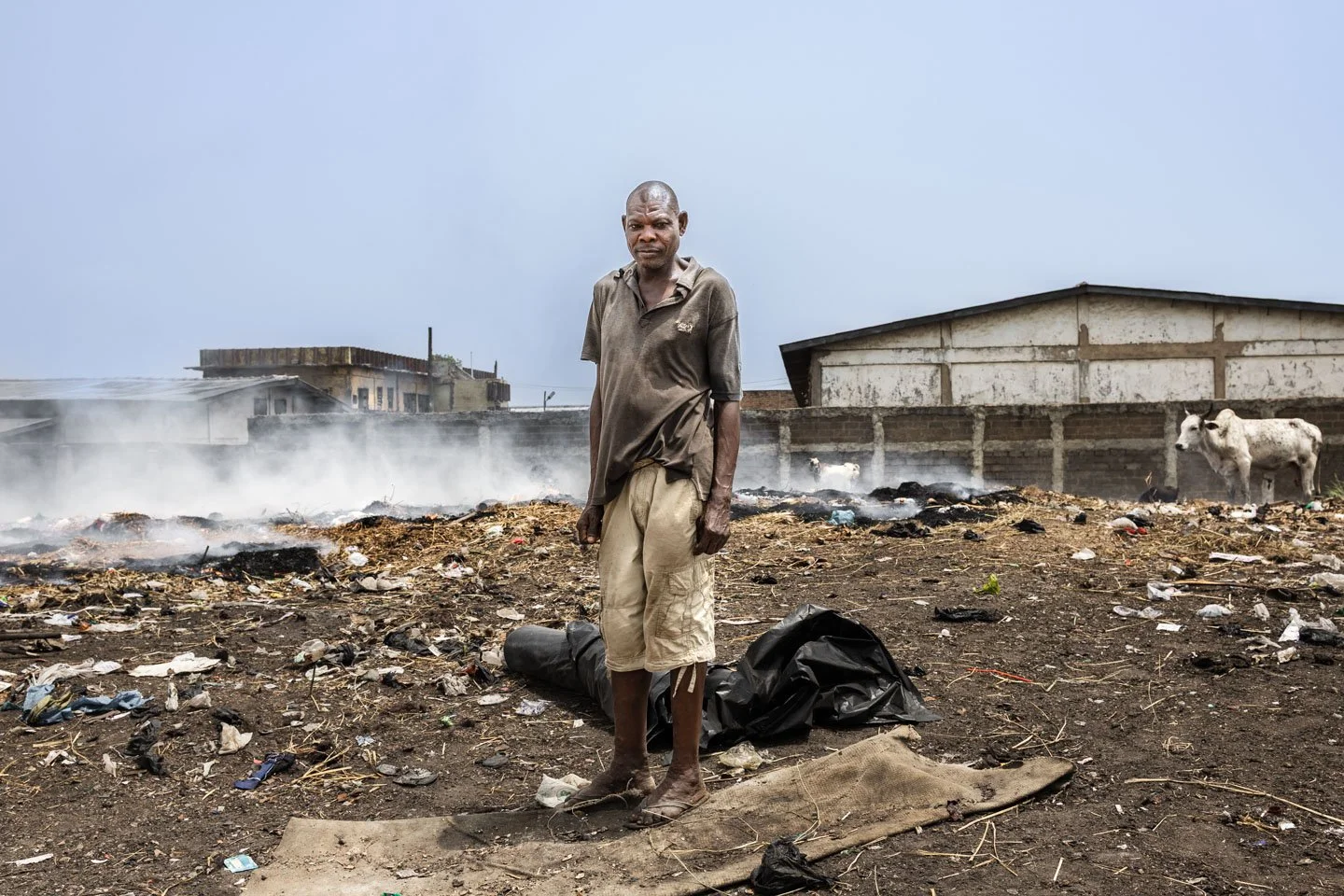
Accra, Ghana
This man works at one of the many local dump sites scattered throughout Accra. They are meant to be interim locations where independent collectors can easily unload their carts of waste collected from neighbourhood streets and homes. The waste from these interim sites will eventually be picked up by municipal trucks and brought to larger landfill locations outside of the city. In a perfect world.
But every step along the way has been compromised by an ever-growing accumulation of waste. Landfills are overflowing. Fewer trucks can bring new loads of waste. Local city dumps are left uncleared and too full for local collectors to empty their carts. Tomorrow’s neighbourhood waste has nowhere to go.
The solution, for this man and everyone in this long chain of waste management, is to light it all afire. Whether in this local dump or in the city streets or outside your own front door, in this imperfect world of Accra, garbage burns.
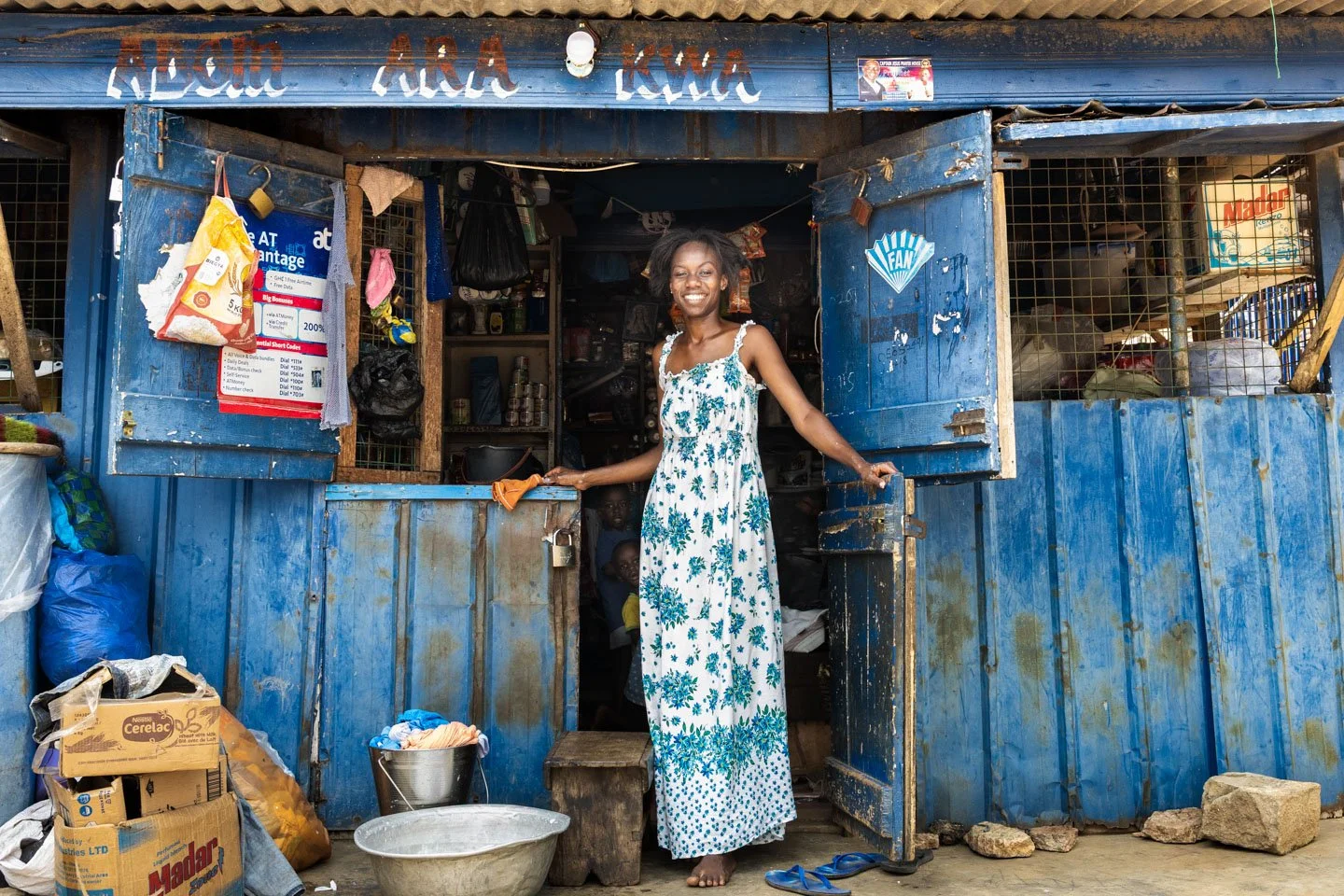
Accra, Ghana
When this woman is not in uniform as an Accra city police officer, she helps out at her mother’s general store. It’s located just inside the police barracks compound where she lives. As a member of the Ghana Police Service she is given the option to live rent-free in the police barracks of the district where she works. The buildings are old and the quarters are tight, but the option provides much needed relief from Accra’s high cost of rent, especially for younger officers on basic pay.
There is, however, a trade-off. The barracks are strategically located near government districts or in high density neighbourhoods where police presence is in greater need. Living rent-free is on the condition that officers remain on 24/7 “standing duty”. A police officer by day and night.
We need a counterweight to the newsworthy images that bombard us daily, depicting the lives of others from within the context of endless global tragedies. But everyday life is far more ordinary and beautiful than this.
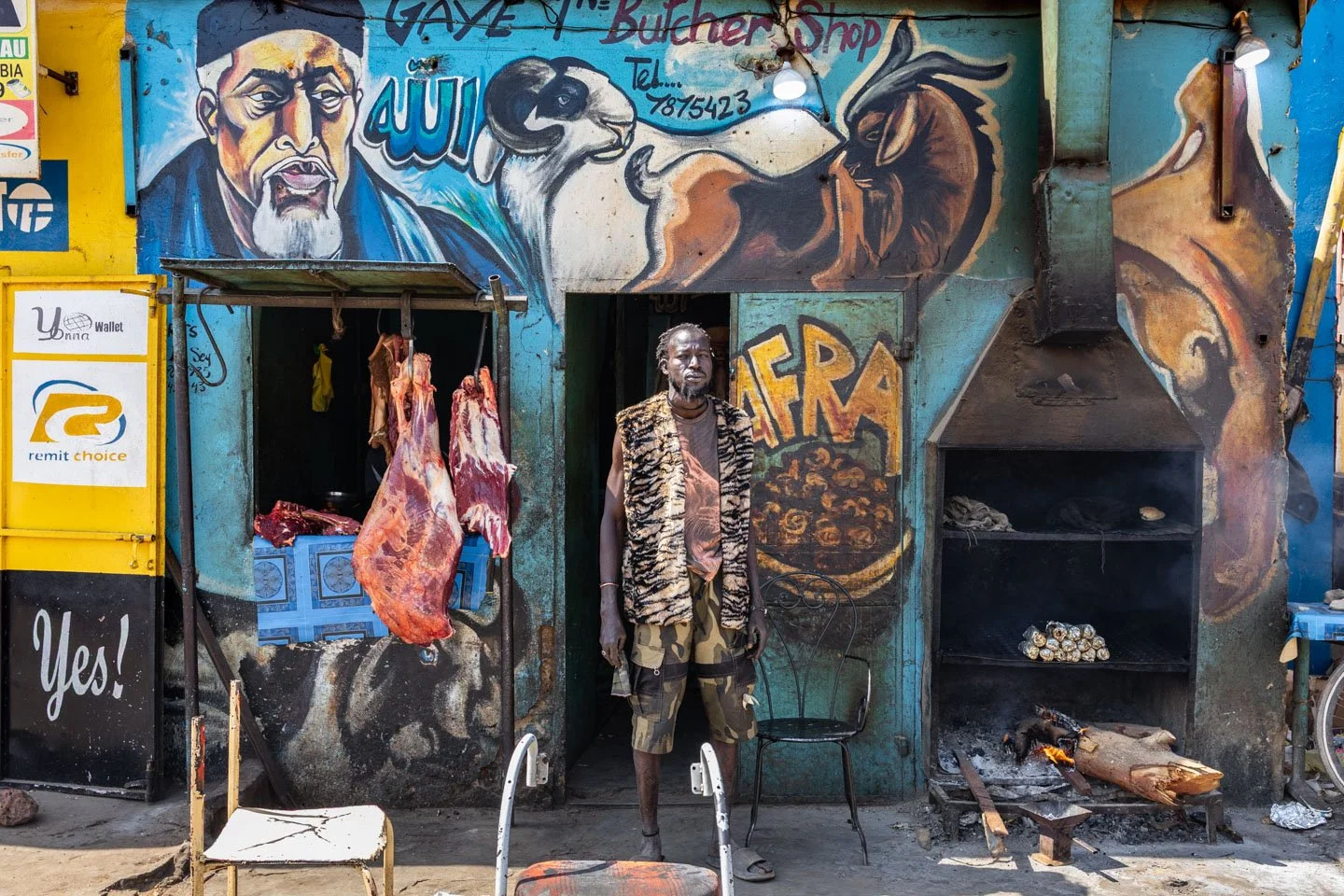
Latrikunda Sabiji, Serekunda, Gambia
There’s a small Rastafarian subculture scattered throughout urban neighbourhoods in the otherwise Muslim majority population of Gambia, likely numbering under a thousand in a country of three million. At first glance it may seem implausible for these two distinct cultural communities to coexist, but in reality it is quite the opposite.
The Muslim population in Gambia is shaped largely by Sufi traditions rooted in spirituality, humility, love and tolerance. Even though their social and cultural ways of life may differ, many Sufi Muslims recognize the Rastafarians’ spiritual devotion to peace and love and empathize with their longing to reconnect to their African roots. The two communities share a sense of African brotherhood, a bond of mutual respect stronger than their differences.
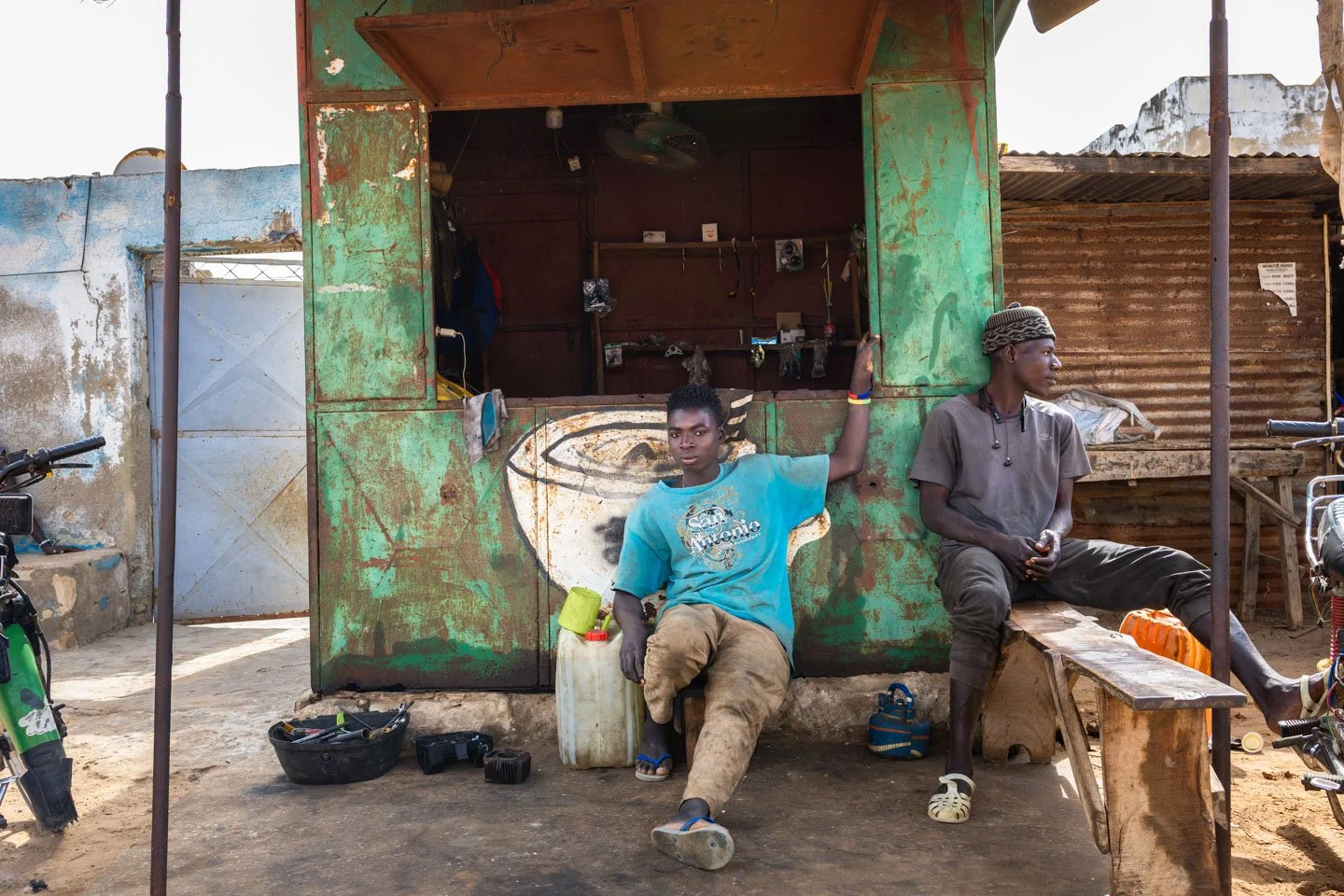
Kaolack, Senegal
There are very few large-scale business enterprises in Senegal. Most work is informal, independent jobs that people create for themselves. Were you to walk the streets of any city you’d easily come across hundreds of clothing vendors, cabinetmakers, tailors and mechanics, each lined up one after the other, using the most basic of tools and building at best a slightly different version of the very same thing. Open early. Closing late. Trying hard to make a living.
These two young men have gone into business together. Their motorbike repair stand is one of many that line the northbound side of the main road heading out of town. It’s another slow morning, but business is bound to pick up.
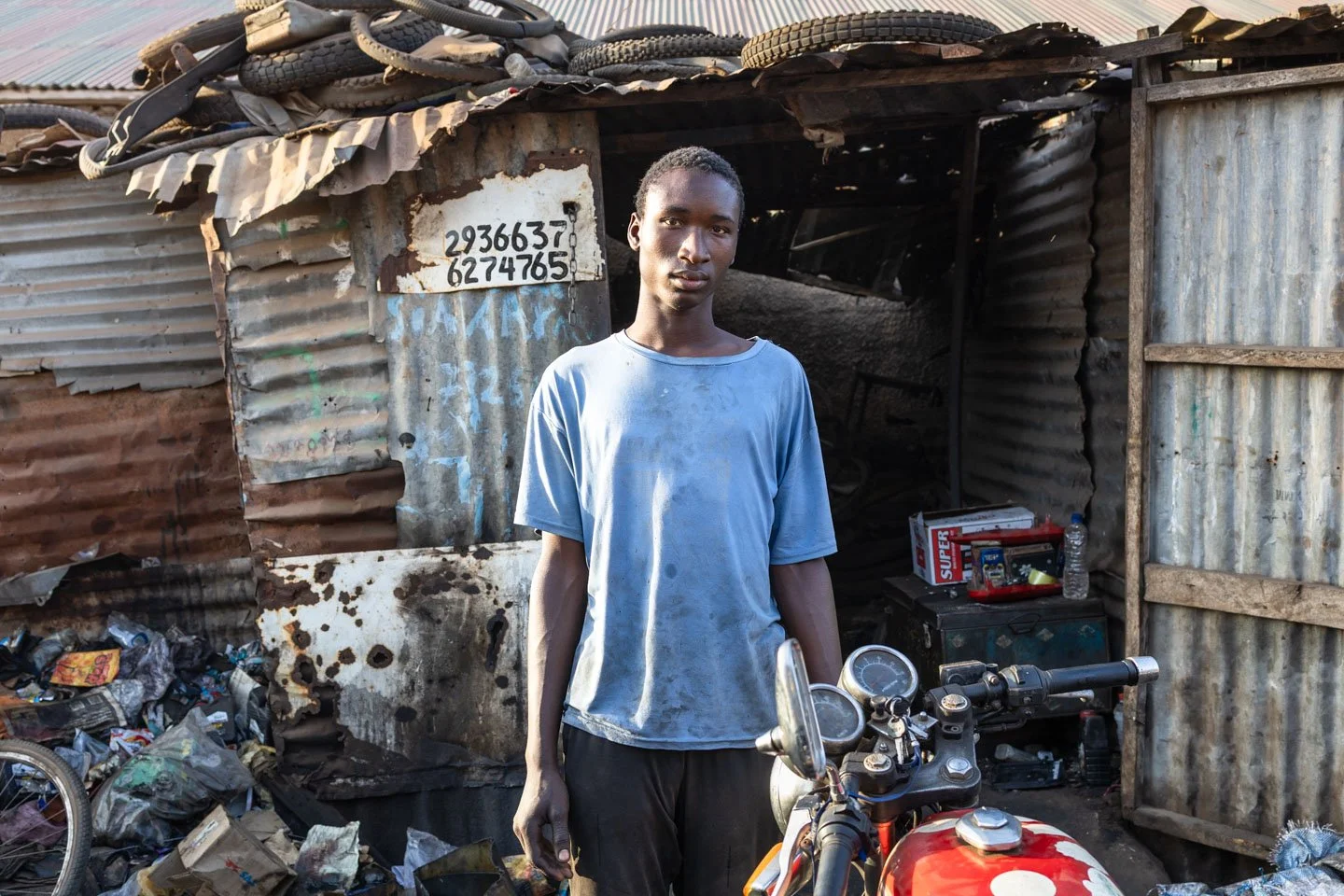
Bundung Borehole, Serekunda, Gambia
This young man is apprenticing to be a motorcycle mechanic. He works here in one of the more established shops in the small neighbourhood of Bundung Borehole, not far from the much larger urban district of Serekunda. The names of cities and villages throughout Gambia reflect the multiple languages and ethnicities of the greater West African region. Five native languages are still widely spoken here: Wolof, Mandinka, Fula, Jola and Serer.
“Serekunda” is Wolof for the home, "kunda", of the respected Muslim scholar, "Sere". Bundung is the Mandinka word for hill or high ground, and Borehole is the colonial British term for water-well.
If you ask this young man where he works, he’ll tell you that his shop is atop of Water-well Hill not far from Sere’s Home.
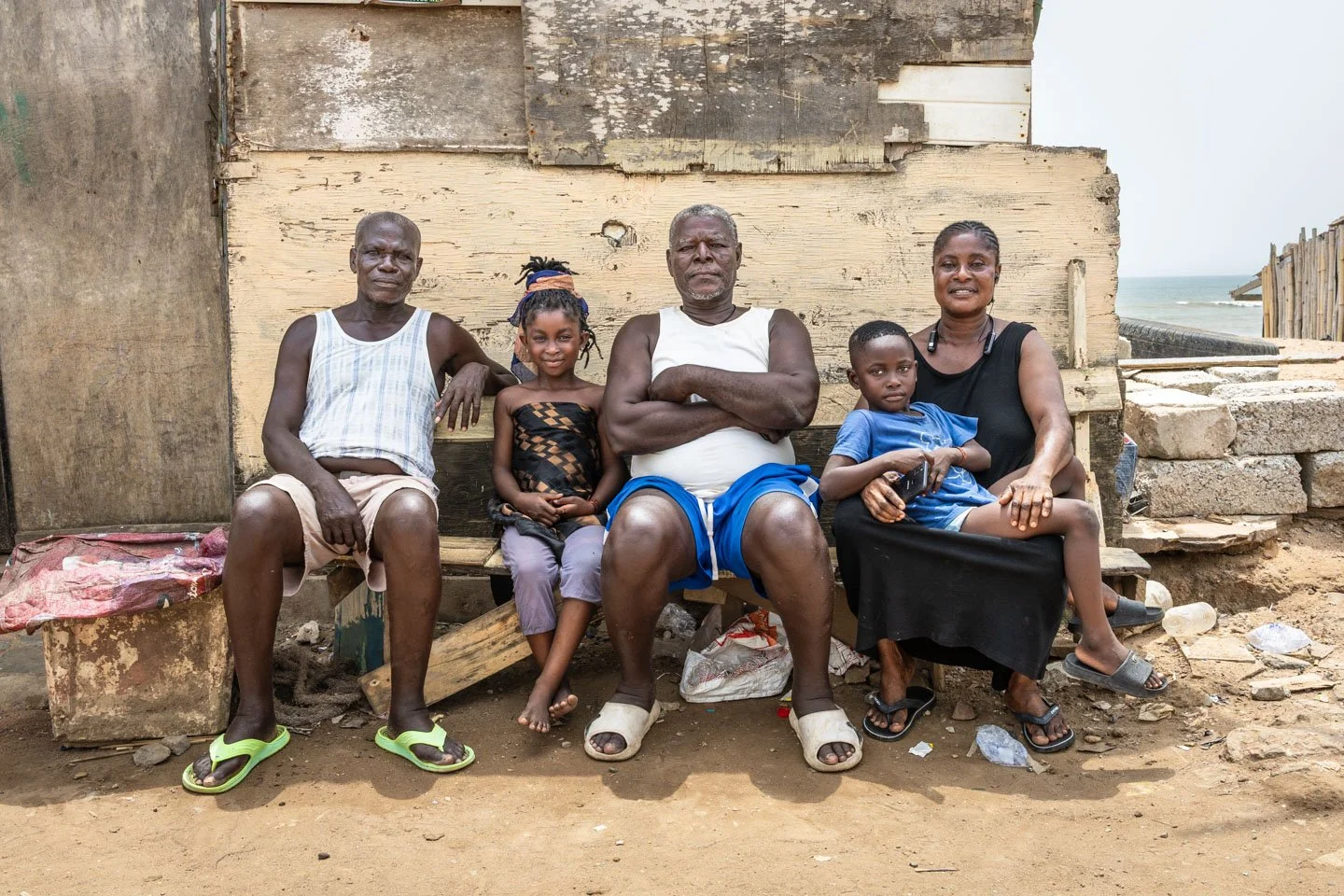
Osu, Accra, Ghana
Accra, Ghana’s capital, is home to over 20 different ethnic groups. Among them, the Ga are widely considered the original inhabitants of the city’s southern coast. Their small homes are built along narrow roads with shared courtyards that foster a close-knit, communal way of life. Over the decades, Accra’s coastal Ga neighbourhoods have grown ever smaller, squeezed between urban development pushing them tighter to the ocean and the saltwater’s steady erosion of the once expansive shoreline.
This is a photograph of family and friends taken on the last of the few remaining roads of their ancestral Ga community. The man on the left lives a few doors away, the grandmother and her two grandchildren live across the road, and the man in the centre lives in this small house just steps away from the shallow escarpment drop to the water’s edge. The ocean is behind them. The world ahead.
The Everyday of Life is a photography project that seeks to level the field in how we understand and appreciate the lives of others, seeing beyond the hardship to the beauty that thrives in spite of it.
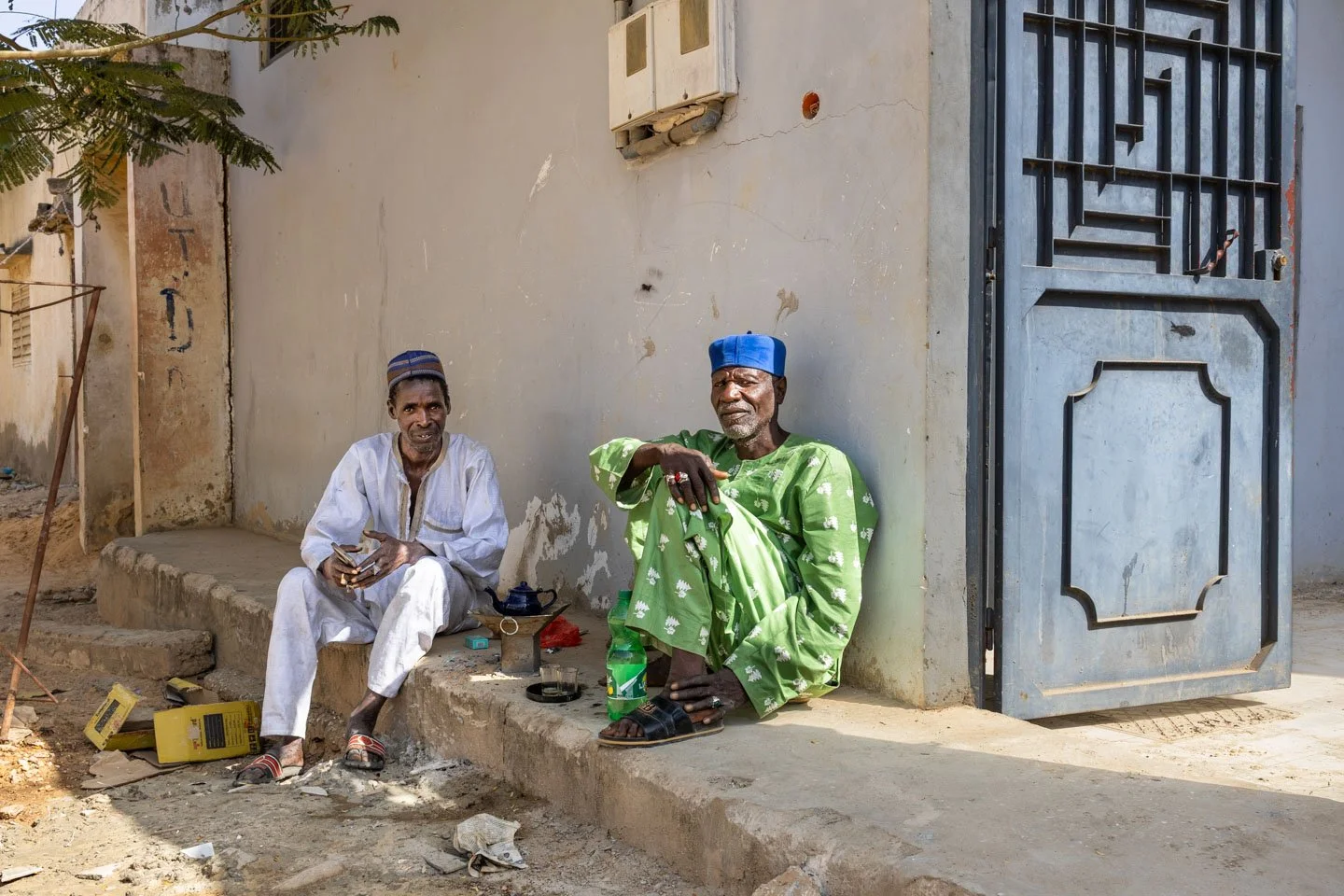
Thiès, Senegal
In the early evening, throughout every neighbourhood in every part of Senegal, a pot of Attaya tea is on the coals. Its first brew will be strong, naturally bitter but sweetened with sugar, intended to mark the end of hard day’s work and the beginning of an evening devoted to family and friends. The second brew will be diluted with just the right amount of water for a perfectly balanced pot—but only when you’re ready for it, ready to open up and let go of everything on your mind. No problem too secret, no story too old.
The third brew is not to be underestimated. It will be weak and delicate, watered down to last forever and for as long as you need to sit together.
Agona Swedru, Ghana
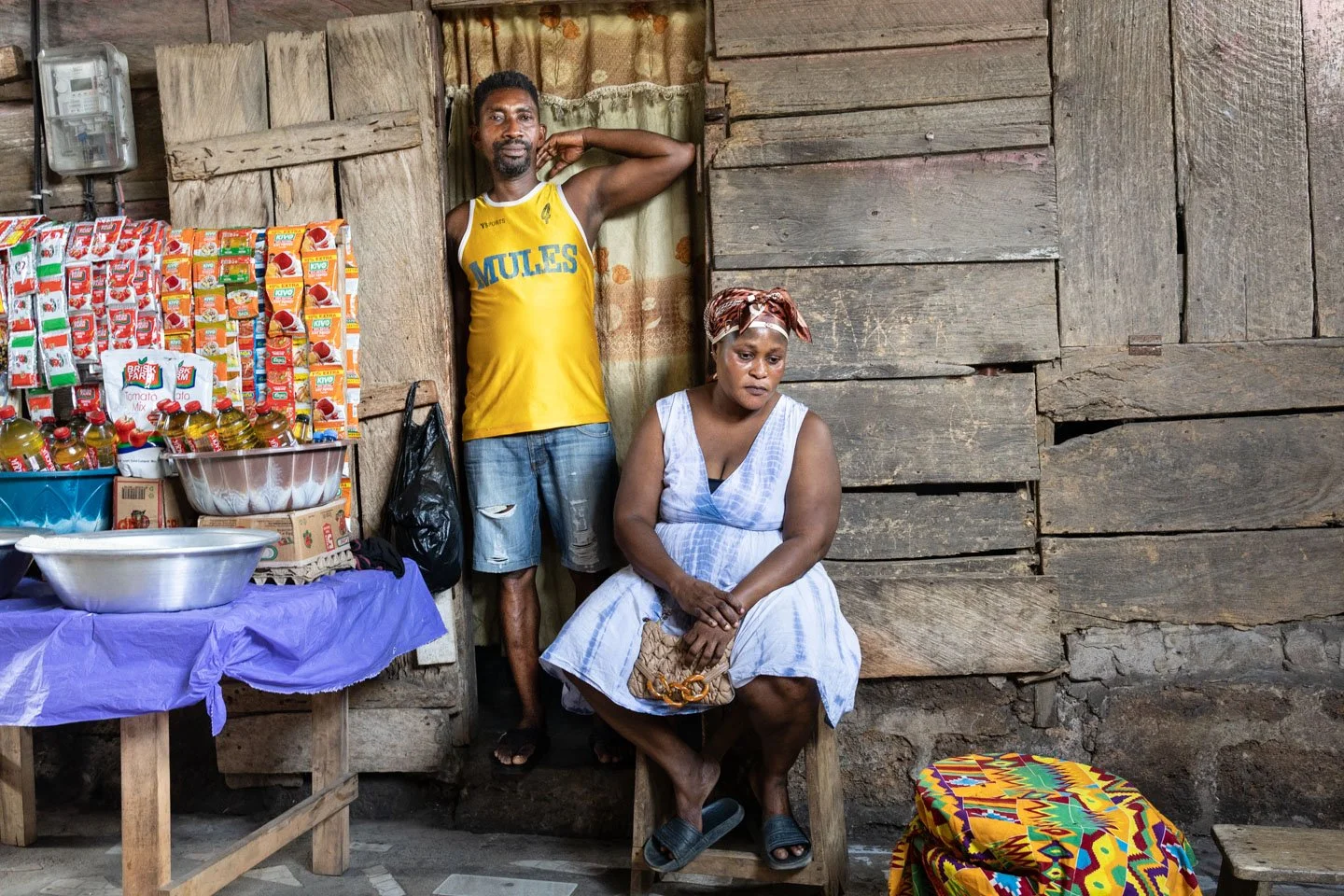
It’s been less than a month since this woman opened her new food stand. She sells single packs of soup starters and small bottles of cooking oil. It’s not a wide selection, but in Ghana everyone needs to find something to sell in order to make ends meet. This man has kindly let her set up outside his door on a narrow laneway that leads to the busier market streets. So far, nothing is quite as she hoped it would be.
Somanya, Ghana
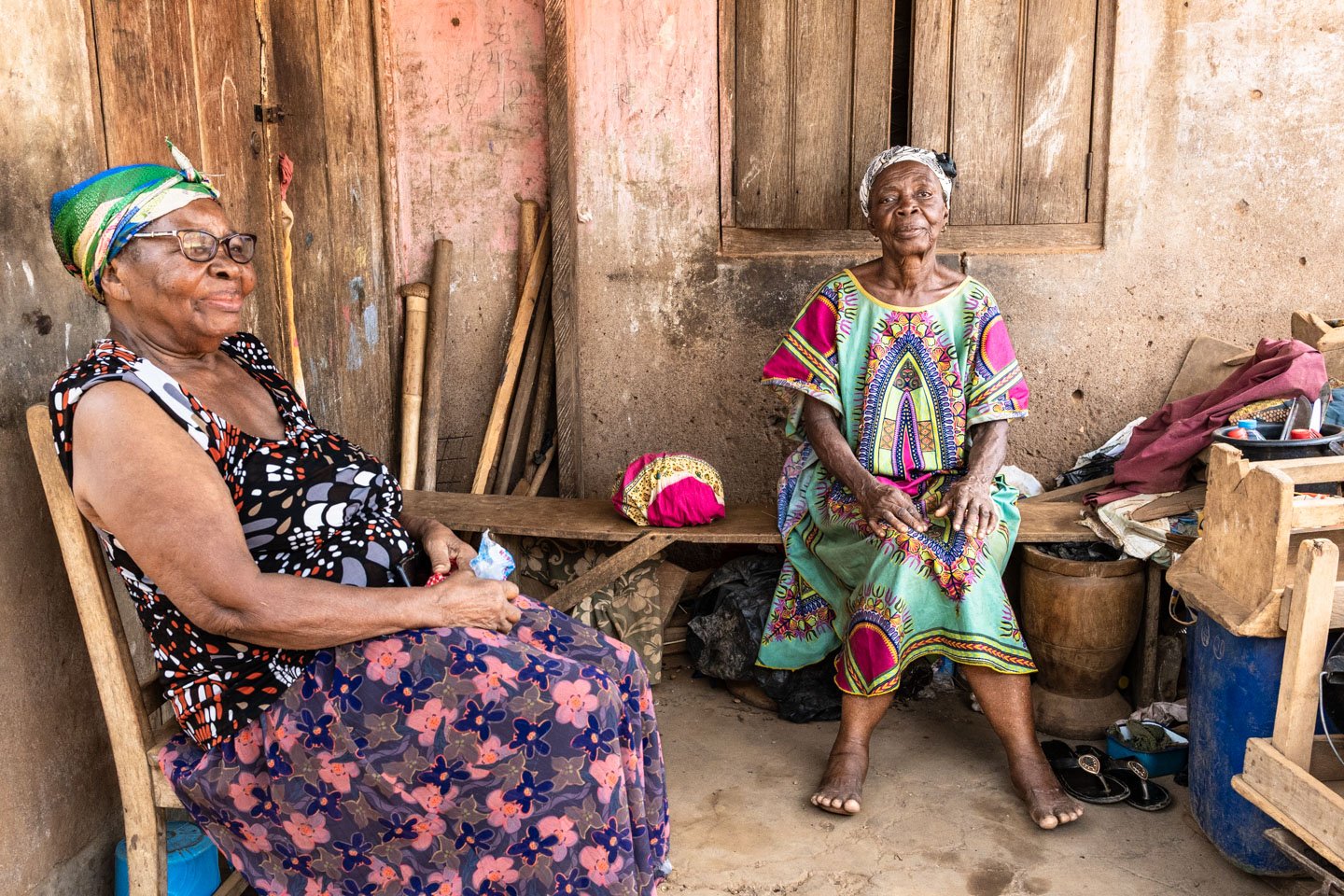
In Ghana, as in many parts of the world, friends often refer to one another as brothers and sisters. In many Ghanaian communities where social ties extend beyond the nuclear family, elders are also commonly addressed as mother or father, a sign of respect and shared belonging.
Anna and Mary are now in their eighties and have been friends for as long as they can remember. Both are widowed, and their children have all left this small town of Somanya for the prosperity of the nation’s capital. They live alone, just doors apart, but have been sisters for what feels like a lifetime, and mothers to almost everyone in town.
Fass Njaga Choi, Gambia
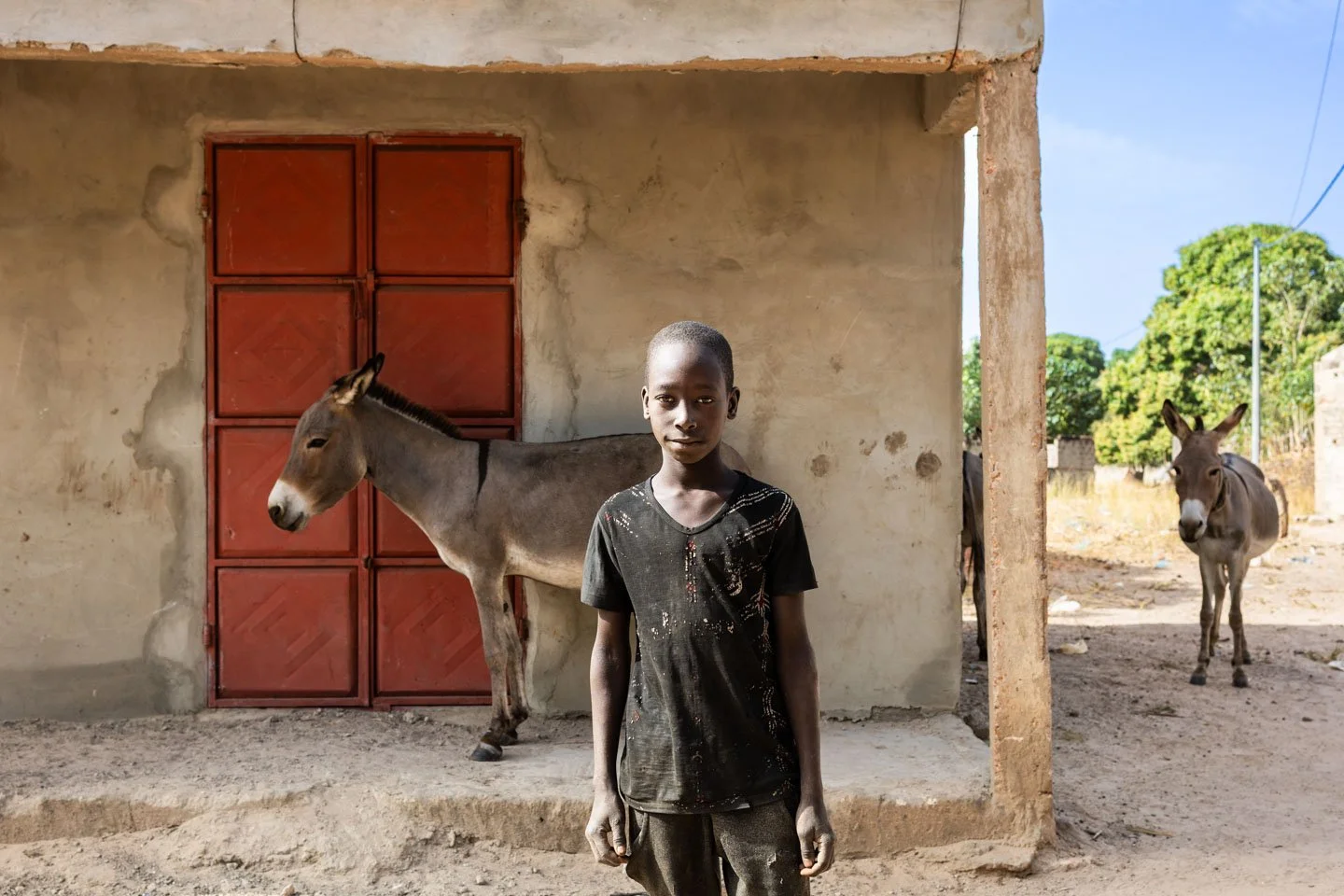
Gambia is a narrow British colonial carve out from the much larger French colonial Senegal. Meandering along the Gambian river, its land mass extends no further north or south than 50km from the river banks. Life here is about water. How near or far you are from the river determines your prosperity: a fishing livelihood, crop irrigation, transportation and trade.
This small village of Fass Njaga Choi is in the north of the country, near the Senegalese border and just 15 kilometres from the mouth of the Gambian river. It is a hot, dry, semi-arid climate that receives little rain and relies heavily on well water for its livelihood. In contrast, the river villages just a short bus ride away are a tropical savanna climate with cooler temperatures and a long, nourishing rainy season.
Agona Swedru, Ghana
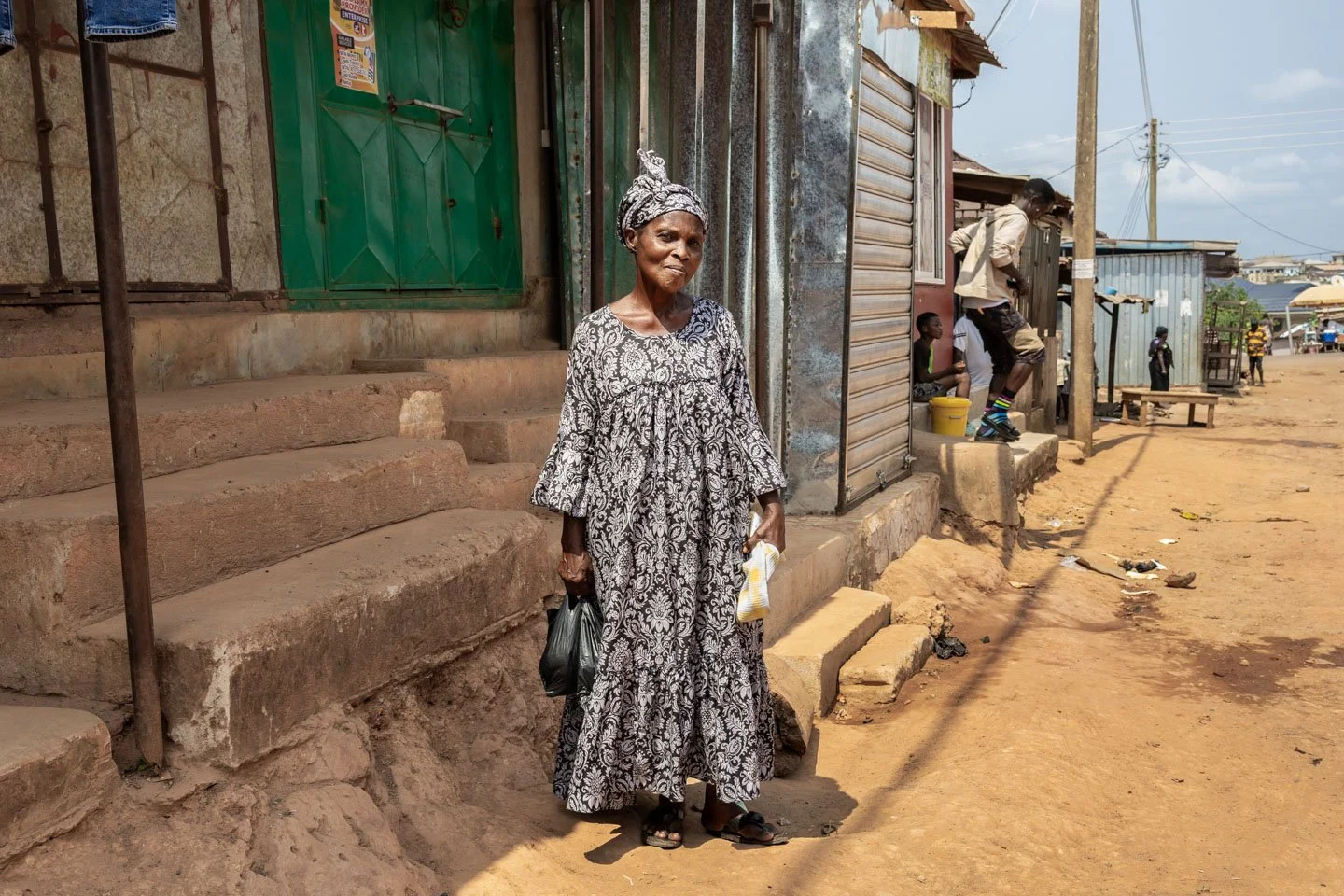
Another lovely woman stops to chat with strangers, but she speaks only Twi and you do not. Twi is the native language of the Akan people, including the Agona clan settlers of Swedru, and it is also the most widely spoken language in Ghana. While English may be the official language of the country, Twi is the official language of the streets.
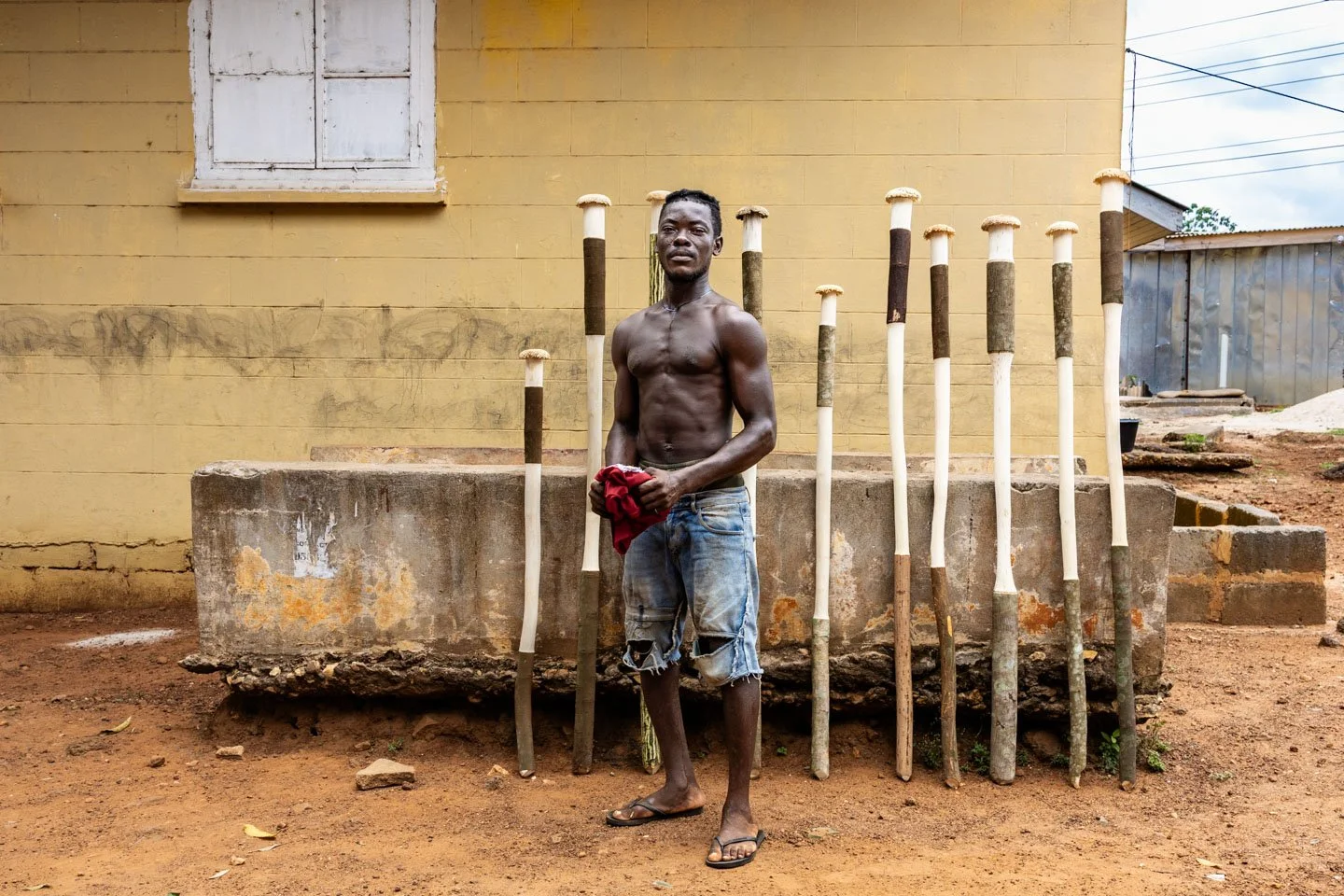
Konongo, Ghana
These decoratively carved tree trunks are actually pestles, and they’re used with equally large mortars to pound fufu—a smooth, stretchy starch made from cassava and plantain, eaten with a light soup.
This man lives near a forest where straight sapling trunks are ideal for making these strong, slender pestles. He shapes them for balance, smoothing part of the shaft for one hand to slide while leaving the rest of the bark for grip. The striking end is heated over an open fire and hardened for pounding. He will even make a pestle to order, just the way you like it.
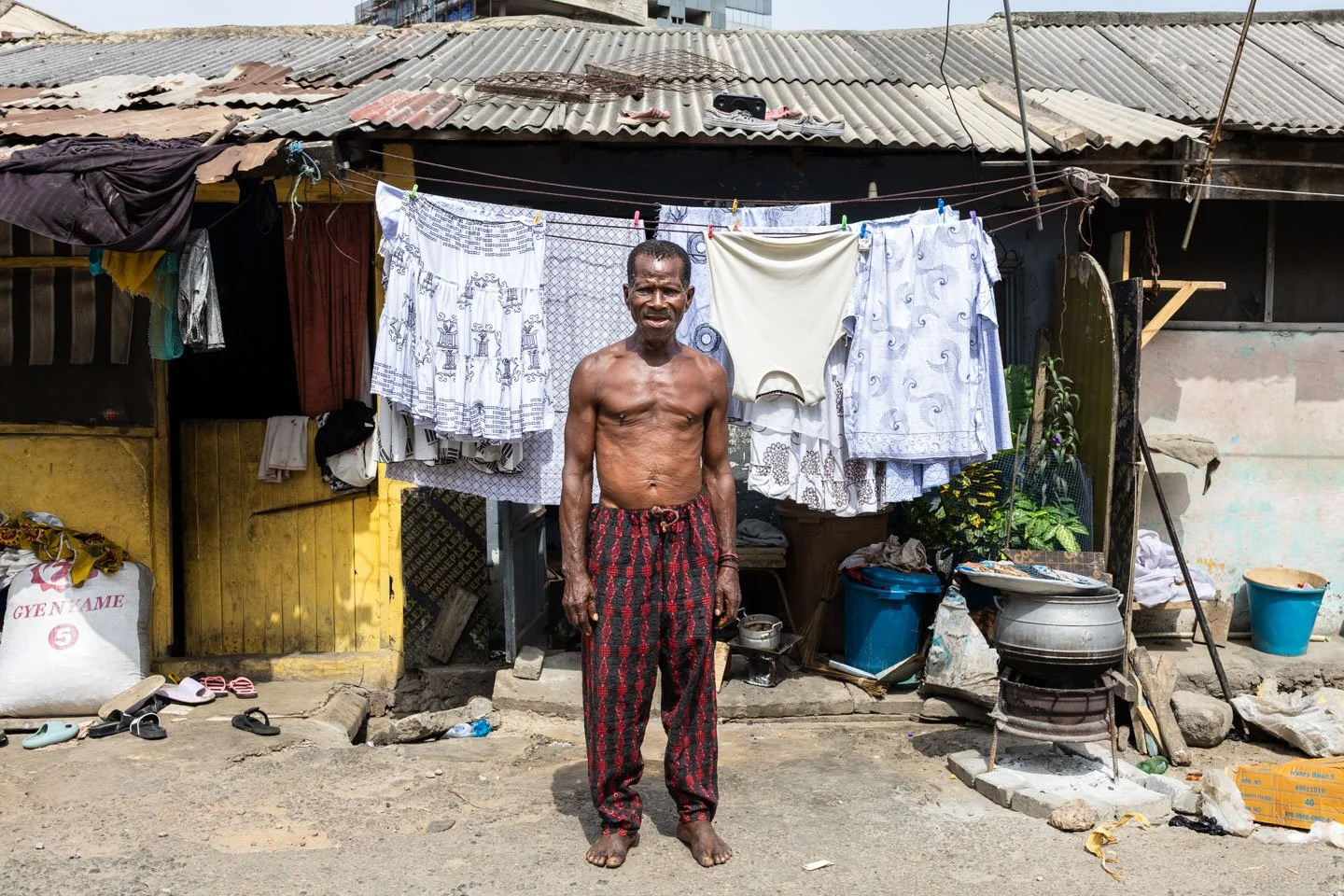
Jamestown, Accra, Ghana
Jamestown is one of the oldest maritime neighbourhoods in Ghana’s capital city of Accra. It developed around the British Fort James and nearby colonial-era landing port, and though it was always a working-class neighbourhood, it was never as impoverished and neglected as it is today.
This man was 12 years old when Ghana gained independence from Britain in 1957. He still lives here in his grandparents’ house which has fallen into the same state of disrepair as Jamestown itself, known citywide for its crumbling historic buildings, pothole-riddled roads and vast network of open sewers. He blames its decline on the loss of Britain and the decades of failed governments that followed.
He’s not alone, especially among elders whose experience of loss now outweighs anticipation of their future. When he speaks of Jamestown today, his voice carries no regret for the nation’s independence, but it does weigh heavy with its people’s collective sense of failure. At 81, he is in mourning for the loss of Jamestown, a fallen neighbourhood that has taken with it the faint glory of his youth.
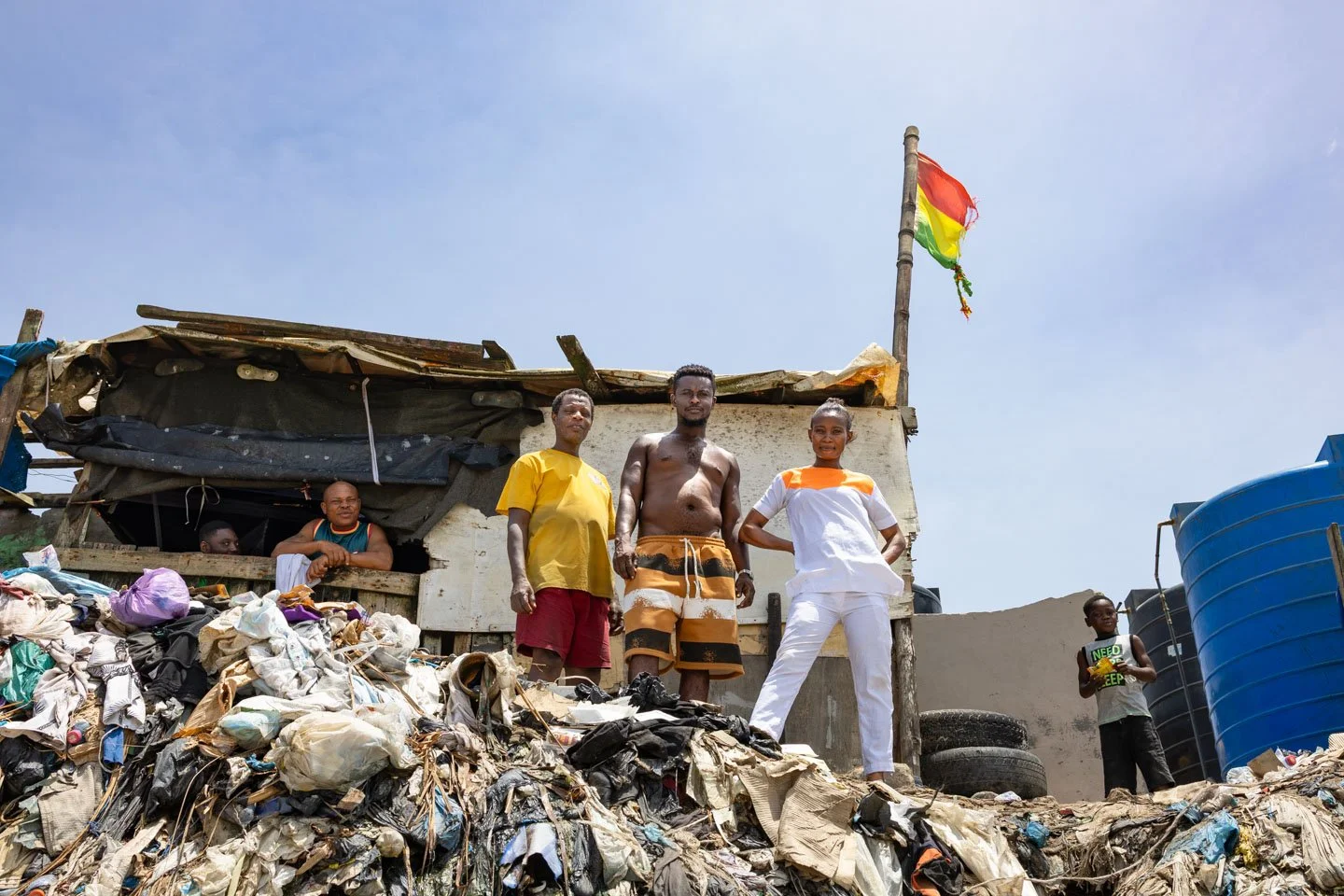
Chorkor, Accra, Ghana
The neighbourhood of Chorkor lies on the western edge of Accra and stretches roughly two kilometres along the Atlantic coast. It’s primarily a fishing community and these five people are part of a crew that fishes the waters just offshore. This is the rest hut they have built for themselves, where they plan their course at the start of each work day and decompress at its end.
The pile of rubble on which they and their hut stand has not been washed ashore. It has not arrived by accident, it’s rubble that’s been gathered from nearby city dumps and laid down as a makeshift foundation for an eroding coastline. The waves of the Atlantic have got to break somewhere.
If you could step back from this frame until the full two-kilometre stretch of Chorkor came into view, you would see that these five crew members are not the only ones to have engineered a new coastline to stand on.